Iceland Travel GuideLOCAL TRAVEL AGENCY IN ICELAND
My trip
Talk to a local
Iceland Travel GuideLOCAL TRAVEL AGENCY IN ICELAND
My trip
Talk to a local
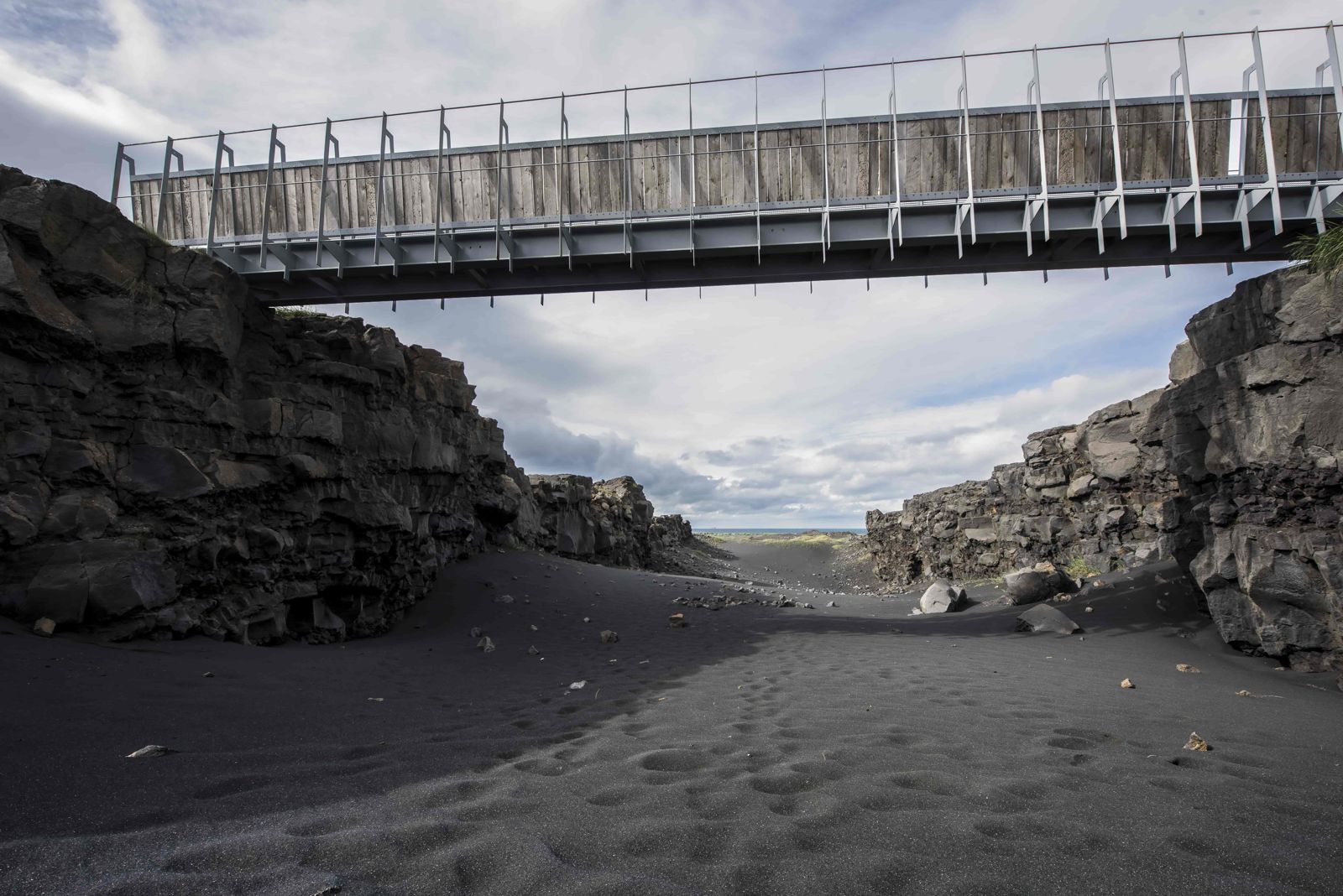
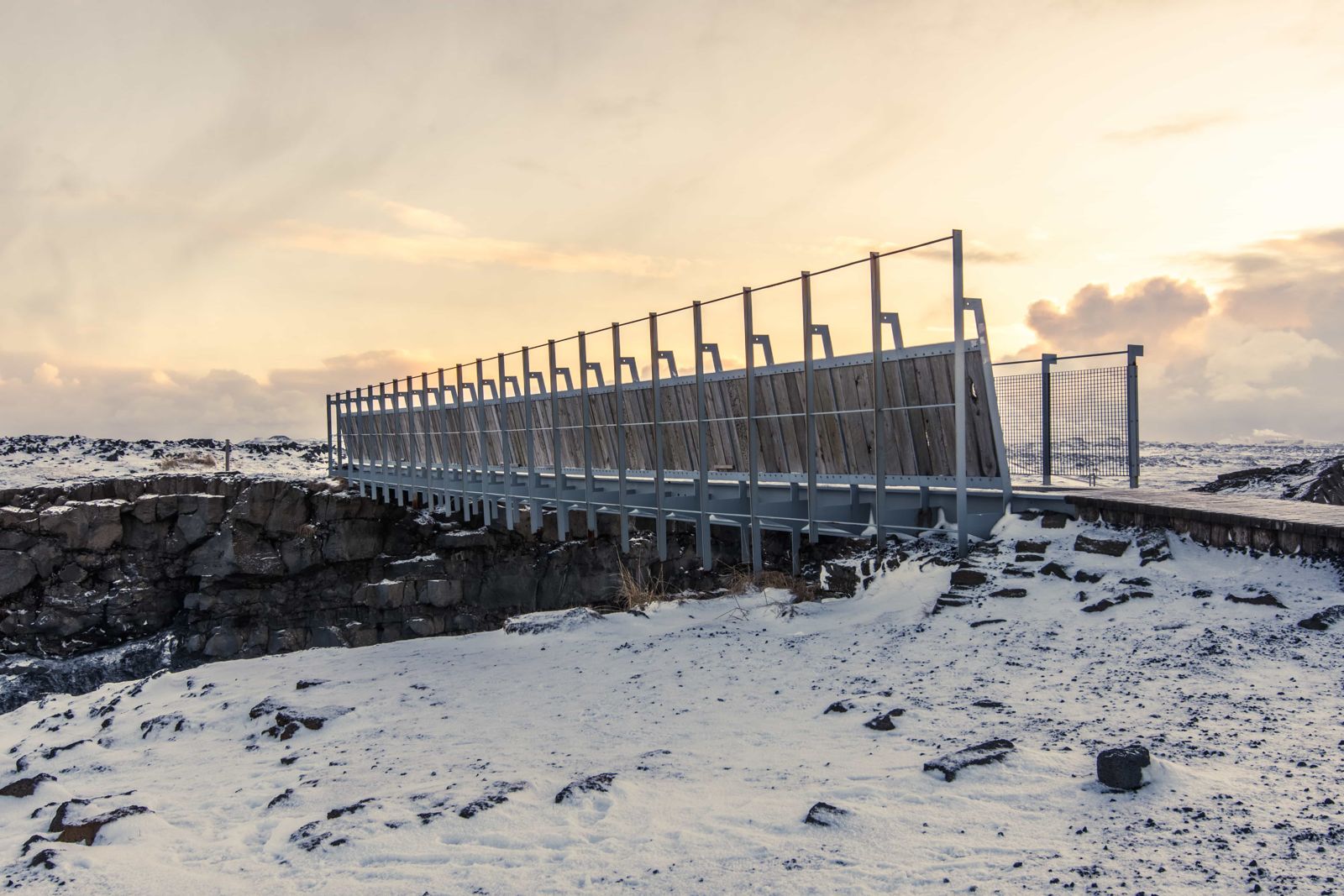
The Bridge Between Continents is a small footbridge at Sandvík on the Reykjanes Peninsula, built over a fissure that marks the divide between the Eurasian and North American tectonic plates. It is about 60 km (close to an hour) from Reykjavík and about 20 minutes from Keflavík Airport, free to visit, open all year, and takes only 15–20 minutes to see.
The bridge itself is modest, a 15-metre footbridge over a rift in the ground, but the idea behind it is not: this is one of the few places on land where you can walk between two continents in a few seconds. The fissure below is part of the Mid-Atlantic Ridge, the boundary where the Eurasian and North American plates are slowly pulling apart, at a rate of roughly 2 to 2.5 centimetres a year.
Built in 2002 as a symbolic link between the continents, the bridge sits in a stark, open lava landscape typical of the Reykjanes Peninsula. In Icelandic it is called Miðlína, "the midline". It is a quick stop rather than a destination in itself, but a memorable one, especially for anyone who wants a simple, visible way to picture continental drift.
Because it is so close to the airport, the bridge is also a good choice on a short stopover in Iceland, or as a first or last stop on the day you fly.
The bridge was first named after Leifur Eiríksson, known as Leif the Lucky. More than 1,000 years ago the Iceland-born explorer sailed west from Greenland and is believed to have been the first European to set foot in North America.
Walking from Europe to America took Leif a long sea voyage. Here it takes a few steps, which is the joke behind the bridge and the reason so many people stop for a photo.
Recent seismic activity on the Reykjanes Peninsula has opened new cracks in the ground nearby. Stay on marked paths and away from unmarked fissures and cliff edges.
It is a short visit, so it helps to know what to look for.
The Reykjanes Peninsula lies on one of the world's major plate boundaries, the Mid-Atlantic Ridge. For most of its length the ridge is deep under the ocean, but in Iceland it comes ashore, and the boundary between the Eurasian and North American plates runs right through the middle of the country.
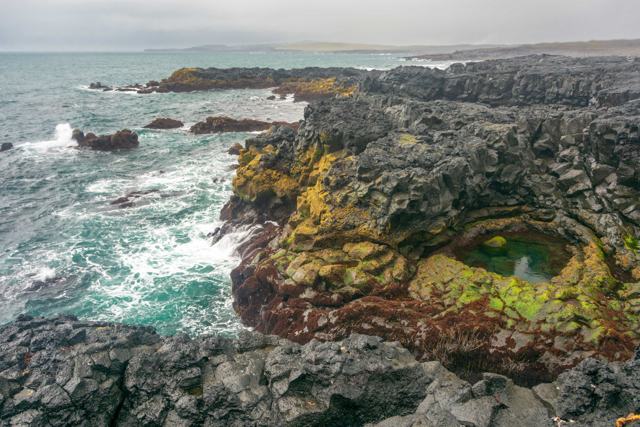
The two plates drift apart all the time. As the tension builds, the crust cracks and the energy is released in earthquakes, eruptions and long, straight fractures in the ground. The fissure under the bridge is one of those fractures, and the scarred lava fields around it show how recent the activity is in geological terms.
There are no toilets, café or shop at the site itself. The nearest reliable services are in Reykjanesbær (Keflavík and Njarðvík).
Most visitors see the bridge on a day trip from Reykjavík or Keflavík, or on a stopover. Reykjanesbær has hotels and guesthouses if you want to stay on the peninsula; check the current situation in Grindavík before planning a night there.
No, it is free to visit and open at all times.
About 60 km, close to an hour by car, and about 20 minutes from Keflavík Airport.
About 15 to 20 minutes is enough to walk across, take photos and read the information signs.
Symbolically, yes. The bridge crosses a fissure marking the divide between the Eurasian and North American tectonic plates, though the true plate boundary runs more broadly through the area than the bridge alone.
About 15 metres. It crosses a fissure between the Eurasian and North American plates.
Yes. It is about 20 minutes from Keflavík Airport, free, and needs only 15–20 minutes on site.
It was named after Leifur Eiríksson, the explorer believed to have reached North America about 1,000 years ago.
Tours and trips that include Bridge Between Continents, booked directly with a local travel agency in Iceland.