Iceland Travel GuideLOCAL TRAVEL AGENCY IN ICELAND
My trip
Talk to a local
Iceland Travel GuideLOCAL TRAVEL AGENCY IN ICELAND
My trip
Talk to a local
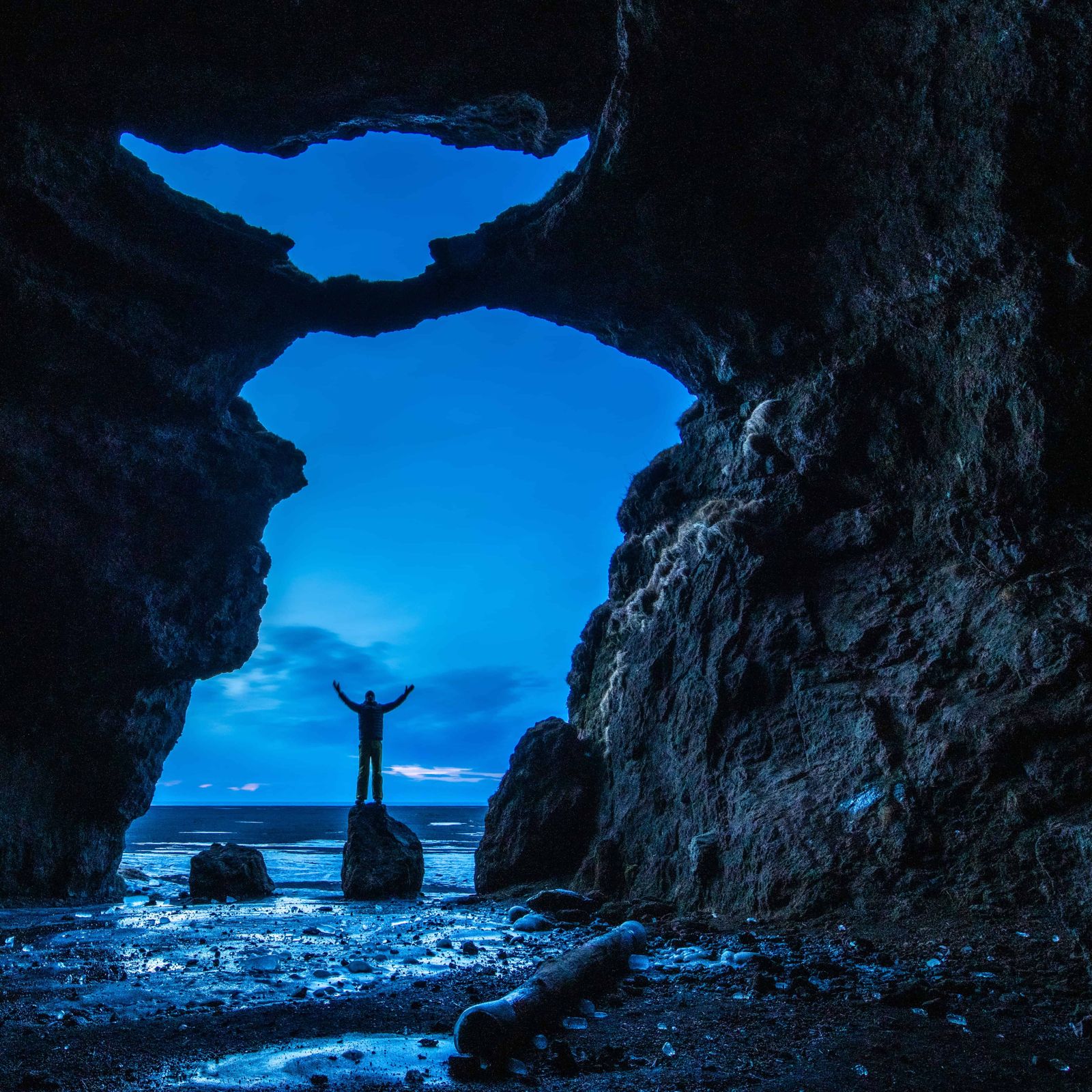
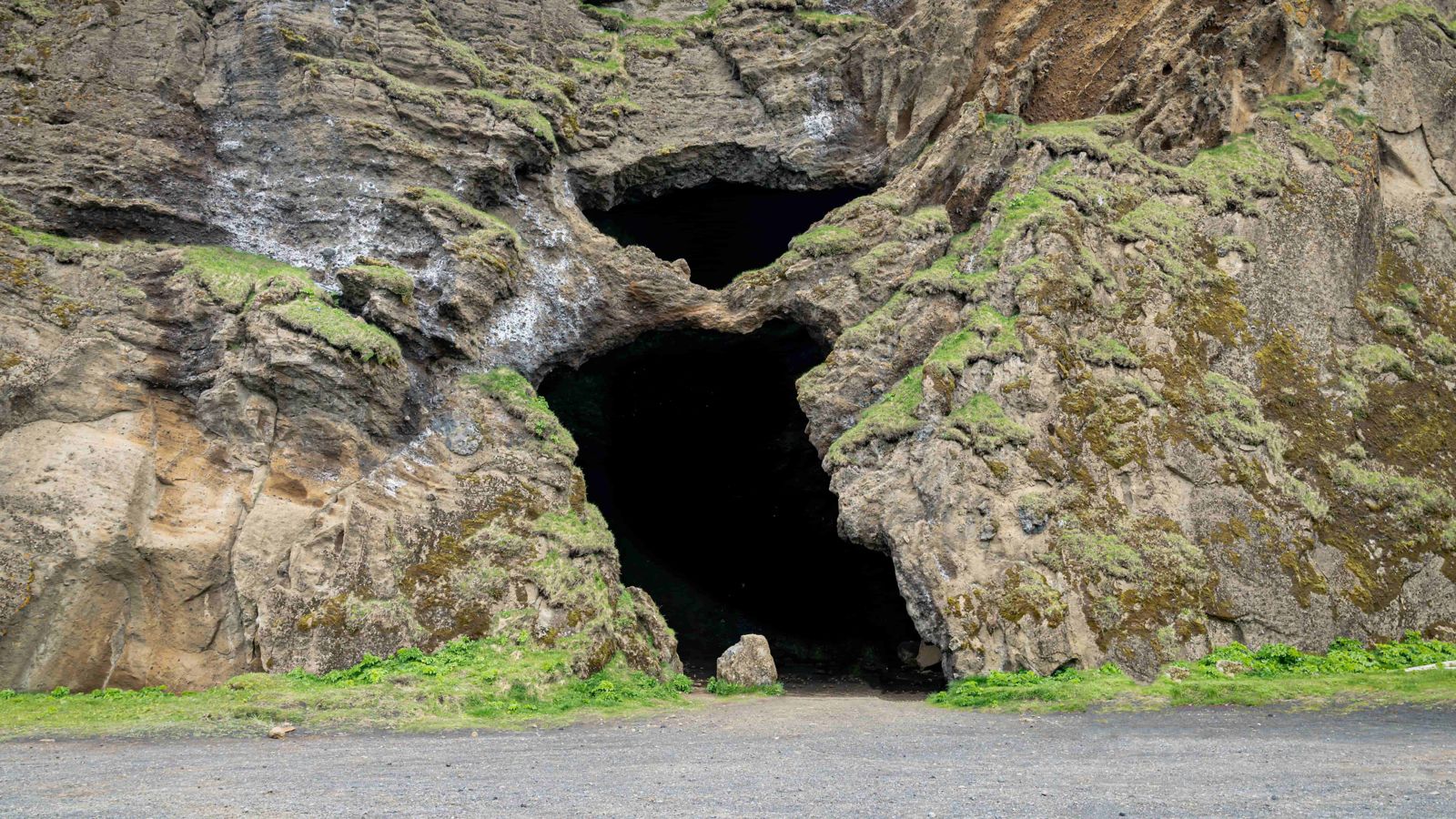
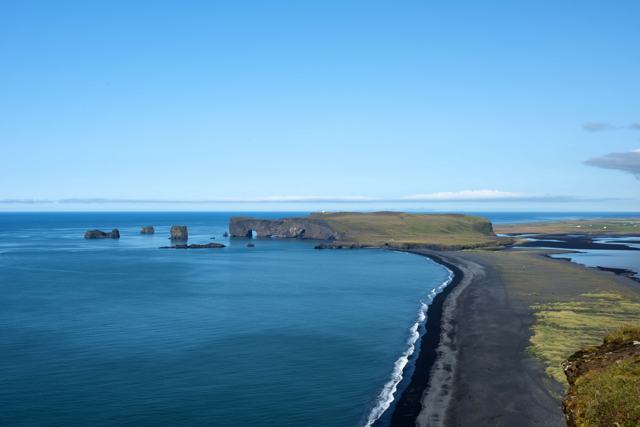
Hjörleifshöfði is a 221-metre promontory on the South Coast, about 14 km east of Vík, that was once an island and is now surrounded by black sand. At its base is the cave Gígjagjá, nicknamed the Yoda Cave for the shape of its opening. There is no entry fee, it is open all year, and the cave itself takes 15–30 minutes to see from the car park. The hike over the top takes 2–3 hours.
Hjörleifshöfði rises out of the flat black sands of the Mýrdalssandur outwash plain, a leftover of a much older coastline before glacial floods and sand pushed the shore further south. The rock was formed in an eruption during the ice age. At the base of the mountain is the cave Gígjagjá. Its tall opening looks like the head and ears of Yoda from Star Wars, most clearly when you stand inside and look out, which is how it earned its nickname among visitors and photographers.
The cave is large and high, with a strong echo. Few people knew about it until scenes for the Star Wars film Rogue One were filmed here. The view out through the opening, over the black sand towards the sea, is the reason to go inside.
The headland is named after Hjörleifur Hróðmarsson, a Viking-age settler said to have arrived in Iceland with his blood brother Ingólfur Arnarson, Iceland's first permanent settler, around 874. According to Landnámabók, Hjörleifur was killed by his own slaves not long after settling here, and local tradition places his grave on the headland. Beyond the cave, a path leads up to the top of Hjörleifshöfði itself, with views over the black sands towards Kötlutangi and the coast.
According to the Icelandic sagas, Hjörleifur Hróðmarsson sailed to Iceland together with Ingólfur Arnarson, who went on to settle in what became Reykjavík. Hjörleifur made land here, at what is now Hjörleifshöfði, but was killed by his Irish slaves soon after, who then fled with his belongings. Ingólfur later hunted them down at the islands that took their name, the Vestmannaeyjar (Westman Islands), meaning 'islands of the Irishmen'.
Tradition holds that Hjörleifur is buried on top of the headland, and a burial mound stands at the summit near the place. The ruins of the old farm and its hayfield are up there too. Like many such places in Iceland, the headland is said to be home to elves and hidden people, so tread with care.
The access road is gravel and can be rough after heavy rain; a 4x4 is recommended outside summer, and it is worth checking road conditions on umferdin.is before you set out.
There are two parts to a visit here, and most people only do the first.
None at the site. The nearest toilets, fuel and shops are in Vík, about 15 minutes away.
Vík is the closest town with a good range of hotels and guesthouses, and makes an easy base for Hjörleifshöfði and the rest of the South Coast.
The shape of the cave entrance, seen from certain angles, resembles the face of the Star Wars character Yoda.
There is no entry fee. A parking fee of about ISK 1,000 has been reported in 2026, so be ready to pay for parking.
About 14 km, around 15 minutes by car.
A standard car usually manages the gravel road in summer, but a 4x4 is safer in winter or after heavy rain.
Allow 2–3 hours for the loop of about 7 km over the top. The path on the west side is the easier way up, but it still has steep and exposed sections, so good boots and care are needed.
Yes. Scenes for Rogue One were filmed at Hjörleifshöfði, which is how the cave became widely known.
Gígjagjá. Yoda Cave is a nickname that comes from the shape of the opening.