Iceland Travel GuideLOCAL TRAVEL AGENCY IN ICELAND
My trip
Talk to a local
Iceland Travel GuideLOCAL TRAVEL AGENCY IN ICELAND
My trip
Talk to a local
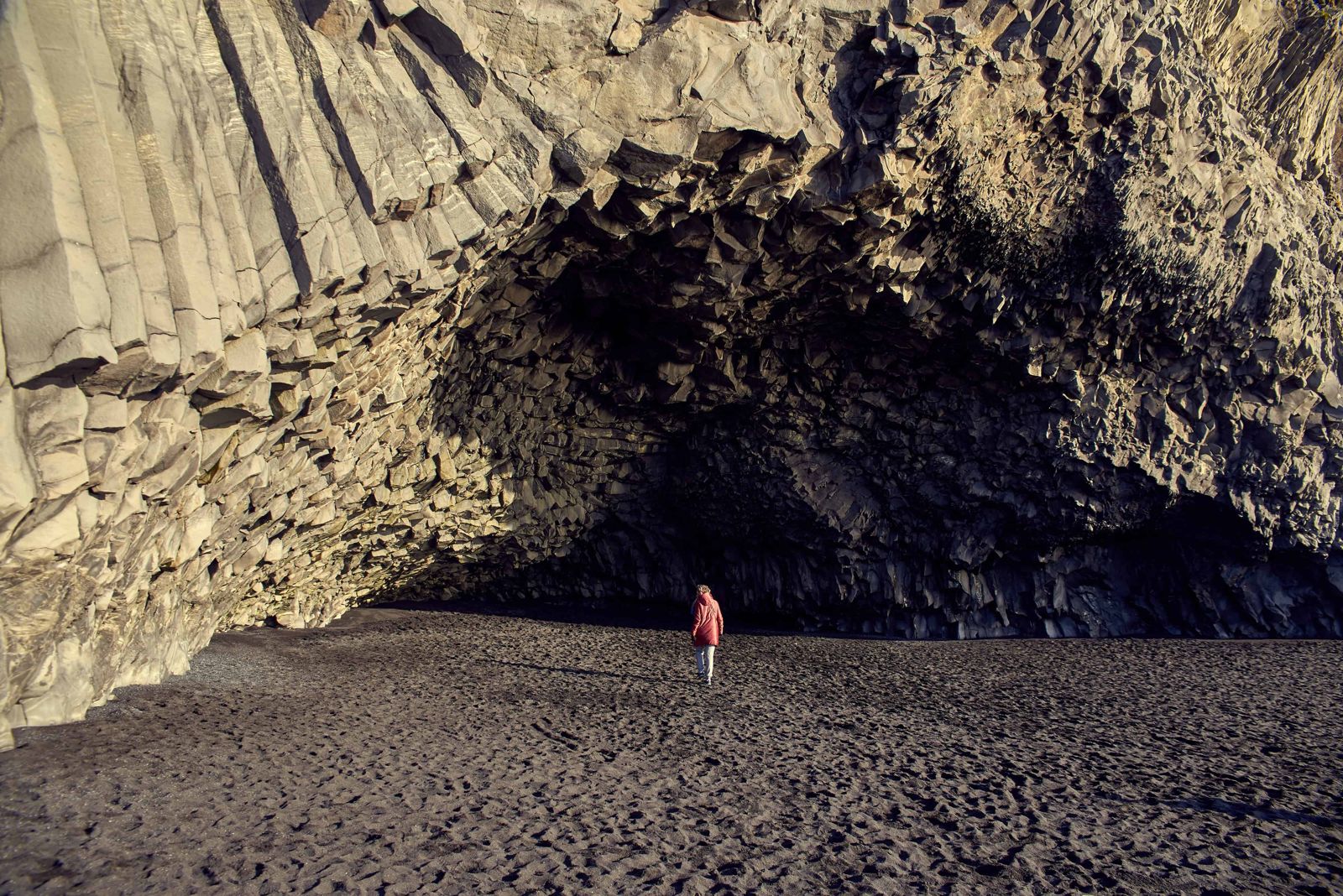
Reynisfjara is Iceland's most famous black sand beach, on the South Coast about 10 km west of Vík í Mýrdal and around 180 km (2 hours 30 minutes) from Reykjavík. The beach is free, parking is paid, it is open all year, and most people spend 45–60 minutes there. It is also one of the most dangerous beaches in Iceland because of sneaker waves, so check the warning lights at the car park before you walk down to the sand.
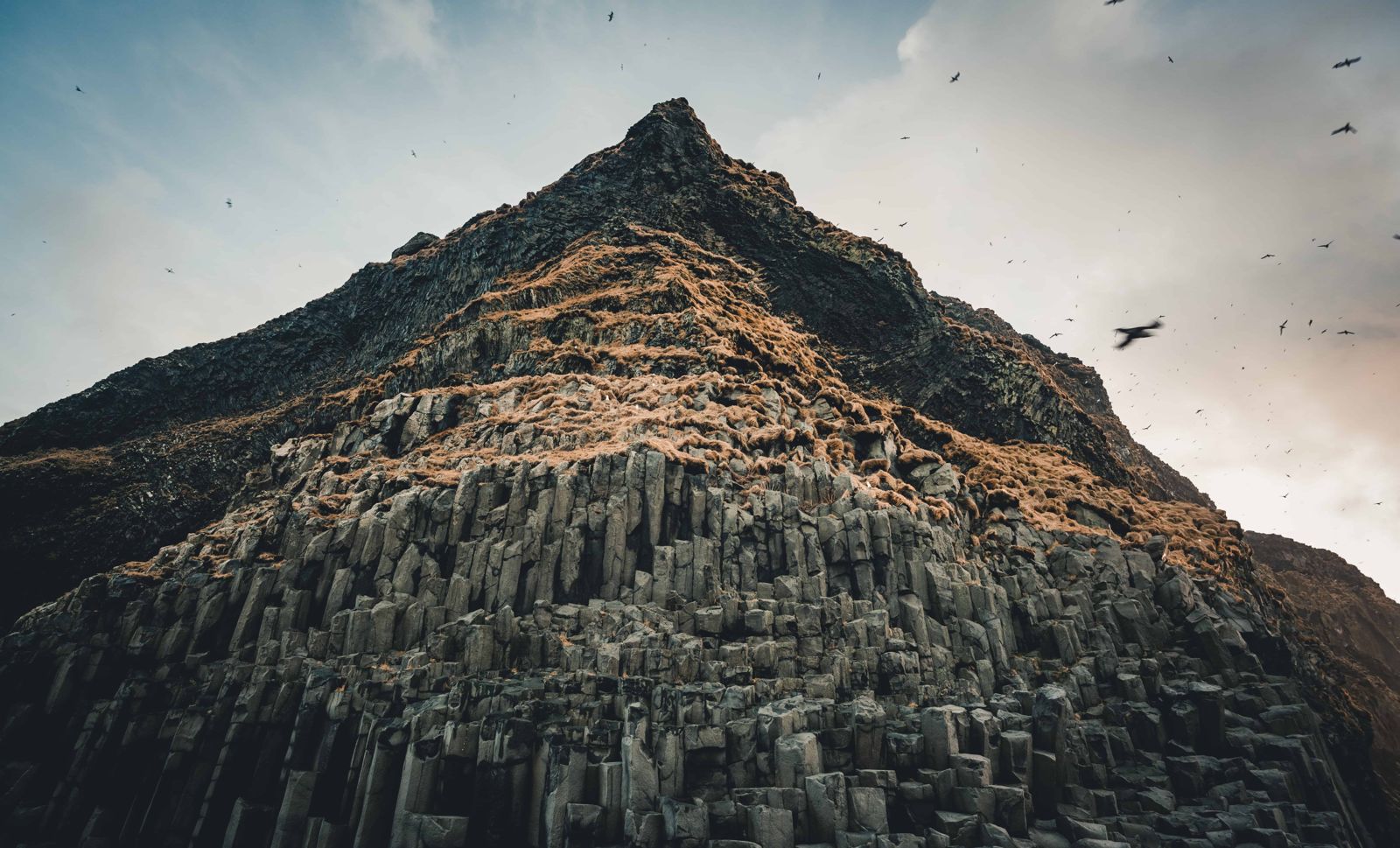
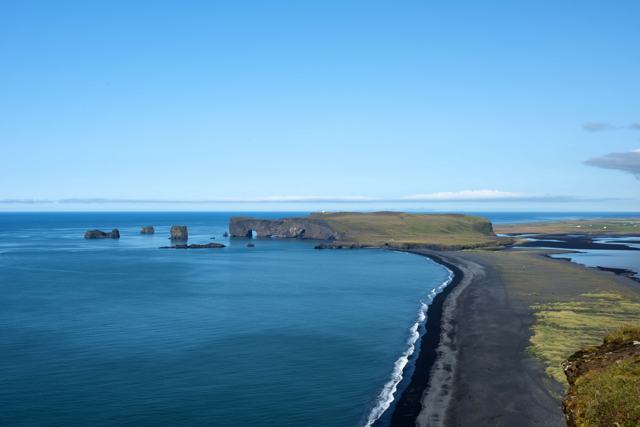
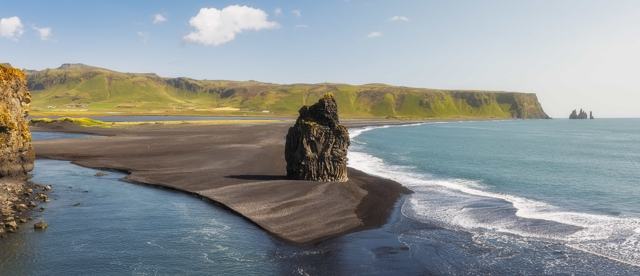
Reynisfjara beach is known for three things: soft black volcanic sand, the Reynisdrangar sea stacks rising out of the surf offshore, and a cliff of hexagonal basalt columns at the western end, beside the cave Hálsanefshellir. The mountain Reynisfjall rises behind the beach, and on a clear day you can look west along the coast to the Dyrhólaey arch.
It is one of the most visited stops on Iceland's South Coast and features on almost every South Coast day tour from Reykjavík, usually together with Seljalandsfoss and Skógafoss. Seabirds nest on the cliffs above, including fulmars and, in summer, puffins, although dedicated colonies such as Dyrhólaey are better for seeing them up close.
The Atlantic here is not calm. The beach faces open ocean with no reef or headland to break the swell, and so-called sneaker waves can rush much further up the sand than the waves before them, with no warning, and pull people into the sea. Several visitors have died at Reynisfjara over the years. A warning light system was installed in 2022, and after a fatal accident in August 2025 the threshold for a red warning was lowered, so the red light now comes on sooner.
If you visit with a guide, they will tell you which parts of the beach are open that day and where to stand. If you visit on your own, read the signs, check the light, keep at least 30 metres from the water and never turn your back on the sea. It is a beautiful place to visit when you respect it.
Icelandic folklore explains the sea stacks as two trolls who tried to drag a three-masted ship ashore during the night. They lost track of time, and when the sun rose over the horizon it turned them to stone where they stood in the water, along with their ship. The stacks are still known by names linked to the story, and it is one of the most repeated troll tales on the south coast.
Geologically, Reynisdrangar and the basalt columns on the beach formed when thick lava cooled slowly and contracted into regular, mostly six-sided columns, the same process you can see at Svartifoss in Skaftafell. The sea has since cut the headland back, leaving the stacks standing offshore.
Check the warning light at the car park on arrival, and look at umferdin.is and vedur.is before driving the South Coast in winter. If you're not comfortable with icy roads, a guided tour is the safer option from October to April.
This is the most important thing to know before visiting Reynisfjara. The rules are simple, but they save lives.
Do not climb high on the basalt columns or stand under the cliffs. Rockfall has injured visitors here in the past.
The sand at Reynisfjara is volcanic. When lava from eruptions such as those of Katla, the volcano under the Mýrdalsjökull glacier just inland, reached the sea, it cooled so fast that it shattered into fragments. The surf has ground those fragments into the dark basalt sand and smooth black pebbles you walk on today.
Rain and spray keep the beach wet most of the time, so the sand rarely dries to grey and stays a deep black against the white surf. That contrast is the reason this is the most famous black sand beach in Iceland.
The weather here changes fast and it is nearly always windy. Dress in layers with a windproof and waterproof shell on top, and bring a hat and gloves outside high summer.
Wear hiking boots or sturdy shoes, because the beach is a mix of soft sand and loose pebbles. This is not a beach for swimwear or sandals.
The warning light, not the season, decides how close you can go. Check it every time.
Black Beach Restaurant, with a café and toilets, is next to the car park. There is no fuel at the beach; the nearest petrol station is in Vík.
Most visitors stay in or around Vík í Mýrdal, which has the widest choice of hotels and guesthouses on this part of the South Coast. Staying nearby lets you visit the beach outside the busiest hours. You can add hotels in Vík to your trip in our trip planner, or choose a self-drive package where the South Coast hotels are already booked.
Yes, it can be. Sneaker waves and a strong undertow have swept people out to sea. Follow the warning lights, keep at least 30 metres from the water and never turn your back on the waves.
Green means calmer conditions but you still keep 30 metres from the water. Yellow means danger and some areas are closed. Red means do not go onto the beach.
No. The beach is free; you only pay for parking, through the Parka app or parka.is.
About 180 km, or 2 hours 30 minutes, from Reykjavík, and about 10 minutes by car from Vík.
No. Swimming is never safe at Reynisfjara because of the currents and waves.
In summer, puffins nest on the cliffs of Reynisfjall above the beach, but Dyrhólaey nearby is a better place to see them up close.
No. Vík has its own black beach by the village. Reynisfjara is on the other side of Reynisfjall, a short drive west.
Yes. Our South Coast day tours from Reykjavík stop at Reynisfjara, along with Seljalandsfoss and Skógafoss.
Tours and trips that include Reynisfjara, booked directly with a local travel agency in Iceland.
 DAY TOURSouth Coast Bus Tour from ReykjavíkFrom 15,990 ISK per person
 PRIVATEPrivate South Coast TourFrom 140,000 ISK per group
 MULTI-DAY2 Day South Coast TourFrom 80,404 ISK per person
 MULTI-DAY3 Day Golden Circle & South Coast Tour with Ice CaveFrom 129,990 ISK per person
 PACKAGE5-Day Iceland Private Tour PackageFrom 495,800 ISK per person
 SELF-DRIVE5-Day South Coast Self-Drive to JökulsárlónFrom 104,700 ISK per person