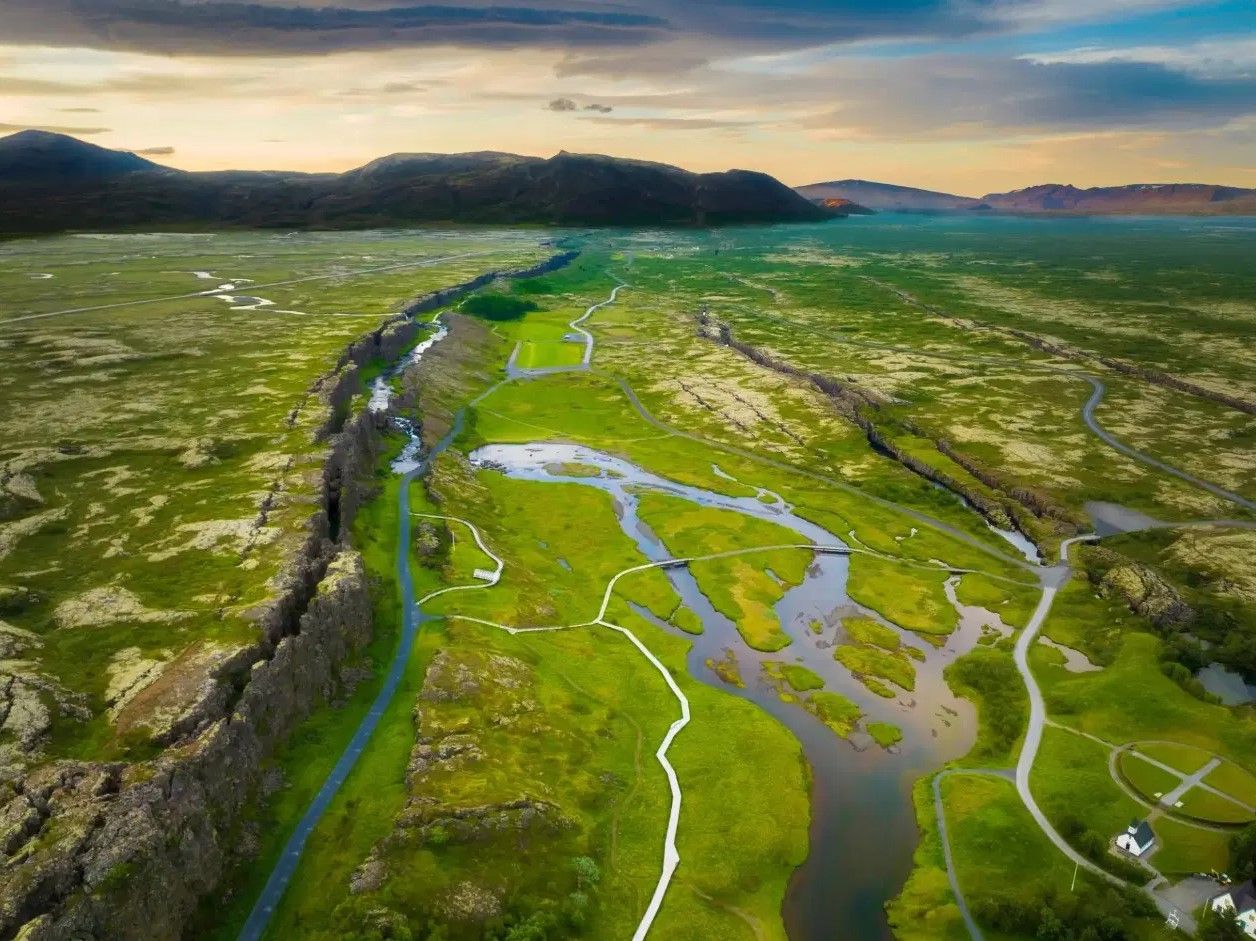
Driving in Iceland in winter is safe for confident drivers who check the road and weather forecasts every morning, keep their days short and are ready to change plans. The main roads are paved and rental cars have winter tyres, but ice, strong wind, darkness and sudden road closures make it harder than a summer trip. If that sounds stressful, a guided tour or a private driver-guide takes you to the same places without the driving.
Is driving in Iceland in winter safe?
For most visitors, yes, as long as you let the weather decide. Many travellers do a winter self-drive trip without any trouble. The ones who get into difficulty have usually driven too fast for the ice, ignored a wind warning, or tried to stick to a tight plan when a road was closed.
A winter self-drive suits you if you feel comfortable behind the wheel, you are happy driving in the dark, and your plan has spare time in it. You do not need to be an expert. In the middle of winter, from December to March, it is better if you have driven on snow and ice before. It is a poor fit if you are a nervous driver, you are uneasy in strong wind, or you have fixed bookings every night on the far side of the country.
There is a middle way. You can book one of our self-drive trips, with the car, hotels and route planned by a local travel agency in Iceland. Or you can leave the car out altogether and join one of our winter Ring Road tours.
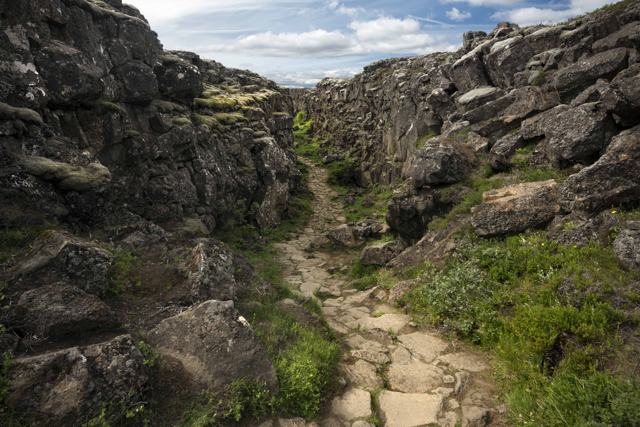
What the roads are like from October to April
The Ring Road (Route 1) is about 1,300 km long, paved all the way and mostly one lane in each direction. It stays open all year, and so do the main roads around Reykjavík, the Golden Circle and the South Coast. Some quieter side roads get little or no winter service.
Winter conditions can arrive in autumn and last into spring. Expect ice that you cannot always see, drifting snow, slush and sudden crosswinds. Wind is the part visitors underestimate. Gusts can pass 100 km/h on exposed stretches, and they are strongest near mountains and headlands.
The mountain passes close first. On the Ring Road these include Hellisheiði between Reykjavík and Hveragerði, Holtavörðuheiði on the way north, Öxnadalsheiði before Akureyri, and the high road between Mývatn and Egilsstaðir. A closure can last a few hours or a few days.
The highland F-roads are closed all winter, so the interior is off limits to rental cars.
Short days: plan your driving around the light
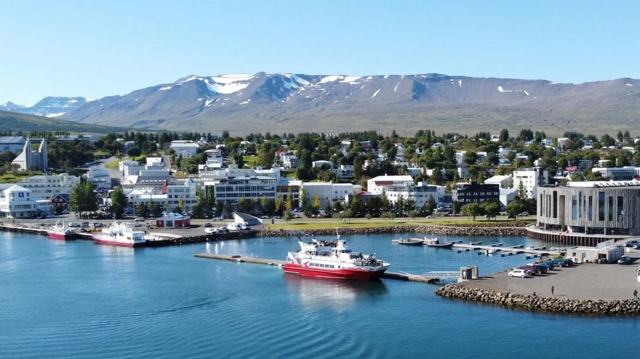
In December and January, Reykjavík has only 4 to 5 hours between sunrise and sunset. On the shortest days the sun comes up after 11 am and sets around 3:30 pm. Twilight stretches the usable light to close to 7 hours, and by the end of February the day is about 10 hours long. Our daylight hours guide has the figures for each month.
Most rural roads have no street lighting, and ice is harder to read in the dark. Plan your longest drive for the middle of the day and aim to arrive before dark.
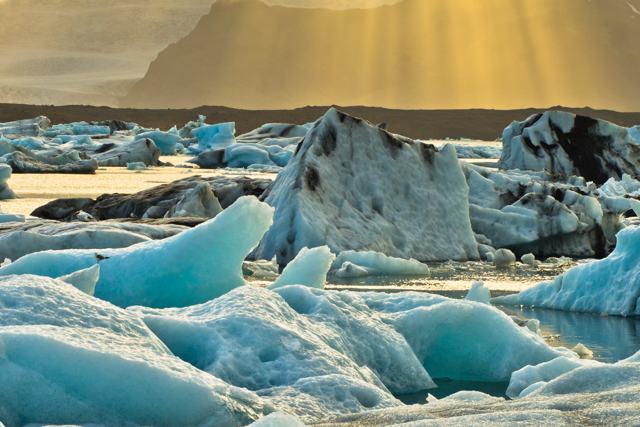
Be realistic about distances. From Reykjavík to Jökulsárlón is roughly 370 km each way, which is too much for one winter day behind the wheel. Split it over two days, or let someone else drive: our 2 Day South Coast Tour includes a night near Skaftafell and a guided ice cave visit.
Rules of the road in Iceland
- Speed limits: 50 km/h in towns, 80 km/h on gravel and 90 km/h on paved rural roads. These are limits for good conditions, not targets for an icy day.
- Single-lane bridges: slow to 50 km/h. The car closer to the bridge goes first. If in doubt, wait.
- Lights: headlights must be on at all times, day and night.
- Seatbelts: everyone wears one, and children under 135 cm need a child seat.
- Alcohol: the limit is 0.02%, so in practice do not drink at all before driving.
- Phones: hands-free only.
- Tyres: from 1 November to 14 April tyres need at least 3 mm of tread, and studded tyres are allowed in that period. Rental cars are fitted with winter tyres.
- Licence: a valid full licence in Latin letters is accepted. If yours uses another script, bring an International Driving Permit together with the original.
Check these three websites every morning
Weather warnings are yellow, orange or red. Yellow means take care. Orange means dangerous weather, and you should not drive in that region unless you have to. Red is rare and means stay where you are.
On the road map, slippery roads and spots of ice are normal winter conditions. Impassable means an ordinary car will not get through. Closed means closed: never drive past a closed sign or barrier. It is dangerous and can cancel your insurance.
In an emergency, call 112.
- umferdin.is: the Road Administration's live map of road conditions and closures. You can also phone 1777.
- vedur.is: the Icelandic Met Office forecast, with wind speeds and weather warnings for each region.
- safetravel.is: travel alerts in English, and a place to leave your travel plan.
Which car, and which insurance
You do not need a 4×4 by law, but we recommend one for winter driving, above all once you leave Reykjavík and the Golden Circle. It gives better grip, more ground clearance and more stability in crosswinds. Our self-drive trips include a 4×4 from October to April for that reason.
Read the insurance carefully. Basic cover often leaves out wind damage to doors, tyres and the underside of the car. Open doors with both hands, and park facing into the wind where you can.
Since 1 January 2026 Iceland charges a kilometre fee on all vehicles: ISK 6.95 per kilometre for cars up to 3.5 tonnes. Rental companies pass it on, sometimes with a handling charge, so ask how it is billed. On our self-drive trips the kilometre fee is paid separately. For a full Ring Road loop the fee itself comes to roughly ISK 9,000.
Where a winter self-drive works well
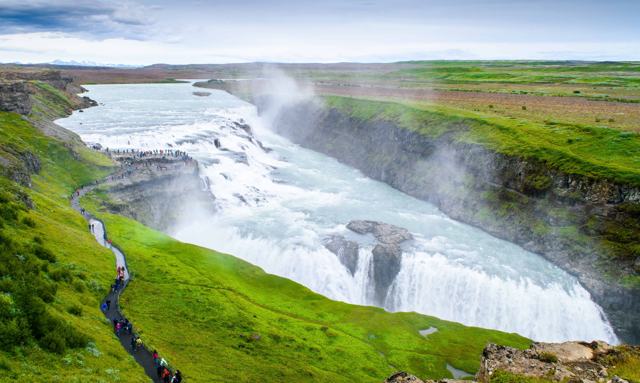
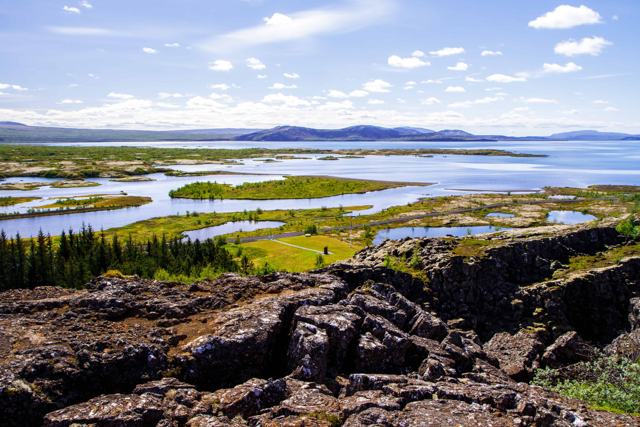
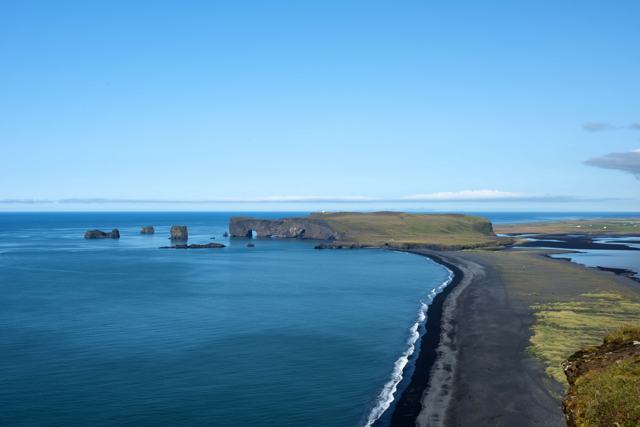
The south and west are the easiest regions. The Golden Circle, with Þingvellir, Geysir and Gullfoss, is a short loop from Reykjavík on main roads. The South Coast to Vík and on to Jökulsárlón follows the Ring Road, with hotels and fuel along the way. It is exposed to wind, so check the forecast before each leg.
Our South Coast and Glacier Lagoon in 5 Days self-drive covers exactly this route. It runs all year and includes the car, four nights in hotels with breakfast, insurance (CDW, super CDW, theft and gravel protection) and a day-by-day route, from ISK 104,700 per person. It is the shortest and lowest-priced of our winter self-drive trips. We plan the days around the daylight and help you re-plan if the weather changes.
Our other winter self-drive trips are longer, from 6 to 10 days, and cost more. They add Snæfellsnes and the Northern Lights, and there is a 10-day winter Ring Road route. You do not need to be an expert for that one, but you do need to feel comfortable driving, and from December to March it is better if you have winter driving experience.
Where a guided tour is the better choice
The full Ring Road in winter is a different job. The north and east have long empty stretches, high passes and fewer hours of light, and one closed pass can break a tightly booked itinerary. This is where we steer most winter visitors towards a guided trip.
The easiest way to see the whole country in winter is our 6 Day Iceland Ring Road Tour – Winter. It runs from September to March in a small-group minibus with a professional guide. It includes five nights in country hotels with breakfast, a glacier hike, a crystal ice cave tour, whale watching and Northern Lights hunting in the evenings. Prices start from ISK 277,000.
With more time, the 8 Day Iceland Winter Tour Around the Ring Road (October to April, up to 18 guests) adds the Snæfellsnes peninsula and Borgarfjörður. With only five days, the 5 Day Iceland Package covers West Iceland, Snæfellsnes, the Golden Circle and the South Coast as far as Jökulsárlón, with a glacier hike, an ice cave and Northern Lights hunting every night the weather allows.
On a guided tour the driver knows the roads, has the right vehicle and makes the call on the weather. You look out of the window, and nobody has to drive home tired after a late night watching the Northern Lights. See all our winter Ring Road tours and Iceland tour packages.
Private tours: your own vehicle without the driving
A private tour sits between the two. You have your own vehicle and a local driver-guide, you choose the pace and the stops, and nobody in your group has to drive on ice. You pay per vehicle, so the cost per person drops as the group grows, which makes it good value for families and small groups.
From Reykjavík, the Golden Circle Private Tour takes 8 to 9 hours and starts from ISK 120,000 per vehicle. The Private South Coast Tour is about 10 hours, from ISK 140,000 per vehicle. Both run all year. For a whole trip, the 5-Day Iceland Private Tour Package combines private airport transfers with three private day tours to the Golden Circle, the South Coast and Snæfellsnes. The 6-Day Iceland Private Tour Package covers the same three tours with a free day in Reykjavík in the middle. Hotels are not included in either package, so you can choose where you want to stay. If you prefer, you can book a hotel with the package and choose between 3-star and 4-star hotels.
For the aurora, a Northern Lights Private Tour saves you from driving dark country roads at night while trying to watch the sky. See all our private tours in Iceland and Northern Lights tours.
Ten tips for a safe winter self-drive
- Check the road map, the weather forecast and the travel alerts every morning, and again at lunchtime.
- Slow down. On ice, brake gently and early, steer smoothly and leave a long gap to the car in front.
- Never stop on the road to take a photo. Use a lay-by or a car park.
- Hold the door with both hands when you open it in wind.
- Keep the tank at least half full.
- Do the long drives in daylight and arrive before dark.
- Plan fewer stops than you would in summer. Two or three sights a day is plenty.
- Keep warm clothes, water, snacks and a charged phone in the car. Our winter packing list has the full list.
- Spend your last night near Reykjavík or the airport, in case a road closes on the day of your flight.
- If the forecast is bad, stay put. A lost day is better than a risky drive.
If the weather changes your plans
Road closures and cancelled activities are a normal part of an Icelandic winter. Build one flexible day into the trip and tell your hotel if you are running late. Our guide to what to do when a tour is cancelled has indoor ideas for a stormy day, and our post on Iceland itinerary mistakes covers how much to plan per day.
If you book a self-drive trip with us, you have local help during the trip, so there is someone to ask when a road closes.
Tours and packages to book
Not sure you want to drive? These are the trips we recommend most for winter.
- 6 Day Iceland Ring Road Tour – Winter: the whole Ring Road with a guide, with an ice cave, a glacier hike and whale watching included.
- 6-Day Iceland Private Tour Package: your own driver-guide for the Golden Circle, the South Coast and Snæfellsnes, with airport transfers.
- South Coast and Glacier Lagoon in 5 Days: a 4×4, hotels and a planned route for drivers who are comfortable on winter roads.
Questions people ask
Is it safe to drive in Iceland in winter?
Yes, if you are comfortable driving, check the road and weather forecasts daily, drive slowly on ice and keep your plans flexible. The south and west are the easiest regions. From December to March it is better to have winter driving experience. If you would prefer not to drive, a guided tour is the easier choice.
Is driving in Iceland difficult?
In summer the main roads are easy to drive. In winter it is harder because of ice, strong wind, short days and road closures. Speed limits are low, traffic is light outside Reykjavík, and the rules are simple, but the weather needs respect.
Do I need a 4×4 to drive in Iceland in winter?
It is not required by law, but we recommend a 4×4 for winter driving. Our self-drive trips include one from October to April.
Do I need an International Driving Permit in Iceland?
Not if your licence is valid and written in Latin letters. If it uses another script, bring an International Driving Permit together with your original licence.
Can you drive the Ring Road in winter?
Yes, the Ring Road is paved and kept open all year, but mountain passes in the north and east close in storms. Allow spare days, or join a guided winter Ring Road tour and let a local driver handle the roads.