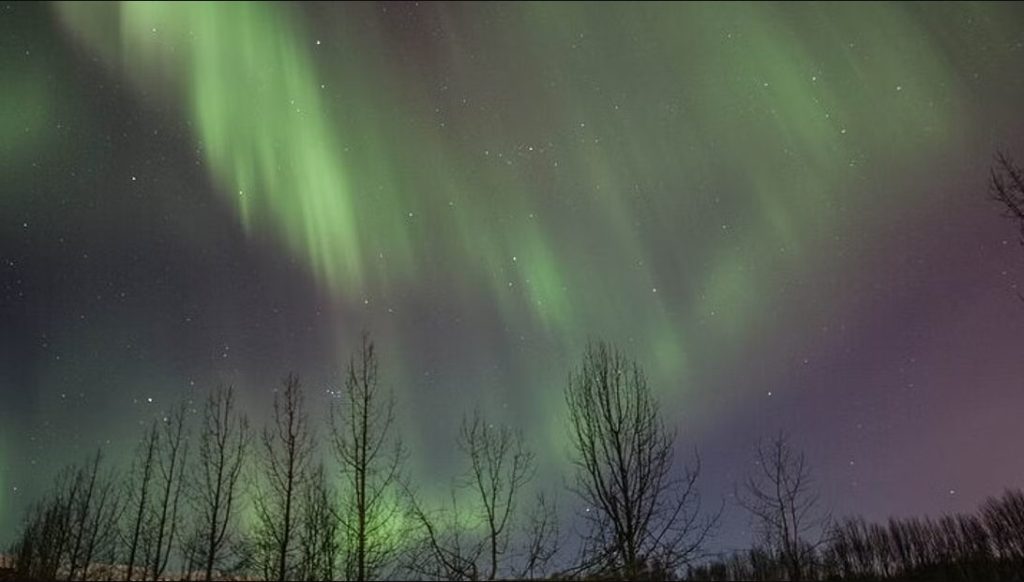
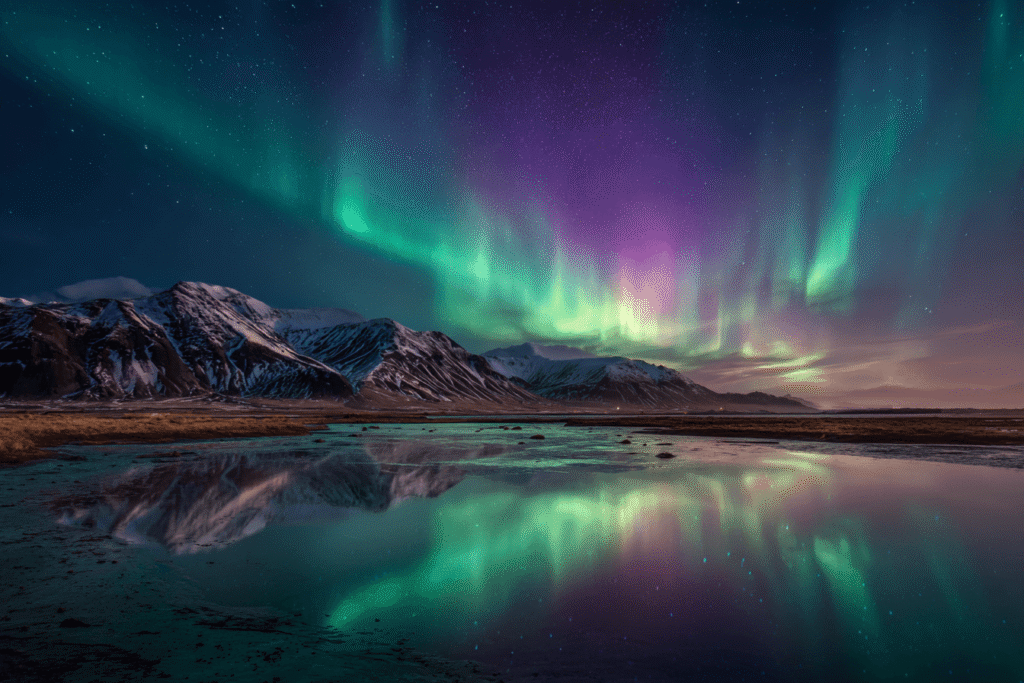
Most common color: green (from oxygen at 100 km altitude)
Rarer colors: red, purple, blue, pink
Not visible in summer (nights are too bright)
Iceland’s location near the Arctic Circle makes it one of the world’s best places to see them
Sightings depend on solar activity + clear, dark skies
Tours often include free rebooking if no lights appear
What Are the Northern Lights?
The Northern Lights, or Aurora Borealis, are one of nature’s most spectacular light shows. They are created when charged particles from the sun travel through space and collide with gases in the Earth’s atmosphere near the magnetic poles. These collisions release bursts of energy in the form of light, which appear in the night sky as shifting waves, arcs, and spirals.
The Science Behind the Lights
The sun constantly emits a stream of charged particles known as the solar wind.
When these particles reach Earth, they are drawn toward the magnetic poles by Earth’s magnetic field.
Collisions with oxygen and nitrogen atoms in the upper atmosphere produce different colors of light:
Green – the most common, produced by oxygen about 100 km above Earth
Red – rarer, produced by oxygen at higher altitudes (200–400 km)
Purple and blue – caused by nitrogen molecules
The result is a glowing curtain of light that can stretch across the entire horizon and constantly shift in shape and intensity.
Why Iceland Is Ideal for the Northern Lights
Iceland’ location just south of the Arctic Circle makes it one of the best places in the world to witness this phenomenon. Wide, open landscapes and limited light pollution outside the cities provide the perfect backdrop. Because Iceland’s nights are long and dark in winter, there are many opportunities to catch a display if conditions are right.
The Human Experience
While the science is fascinating, many travelers describe seeing the aurora as a spiritual or magical experience. In Norse mythology, the lights were believed to be reflections from the armor of the Valkyries guiding fallen warriors to the afterlife. For modern travelers, standing under the glowing green sky in Iceland feels like stepping into another world.
Quick Facts
Scientific name: Aurora Borealis
Colors: Mostly green, with occasional red, purple, and blue
Best conditions: Dark, clear nights, away from city lights, during the months of September to April
Visibility: Highly dependent on solar activity and cloud cover — they are never guaranteed, but Iceland offers some of the best chances worldwide.
The aurora is only visible in Iceland during the darker months of the year.
Northern Lights season: Late August – mid-April
Peak months: September–October and February–March (good balance of darkness and mild weather)
Best hours: 9 PM – 2 AM
Not visible: May–July (nights are too bright due to the Midnight Sun)
👉 For the highest chances, plan your trip between September and April.
Why These Months?
Late August–September: The season begins as nights grow darker. The weather is relatively mild, making this a comfortable time to hunt the aurora.
October–November: Nights are longer, and there’s a good balance between darkness and manageable weather conditions.
December–January: The darkest months, with nearly 20 hours of night. While the weather can be harsh, these months provide the longest viewing windows.
February–March: Another peak period. Clear skies are common, and the weather starts improving while nights are still long.
April: The season winds down, but strong displays are still possible before summer daylight takes over.
Best Hours of the Night
Most aurora activity happens between 9 PM and 2 AM, but it can appear anytime it’s dark. Many tours depart around 8–9 PM and return around midnight or 1 AM, maximizing your chances.
One of the most magical things about the Northern Lights in Iceland is that they can appear almost anywhere in the country. The key is finding dark skies away from city lights. While Reykjavík sometimes offers faint glimpses, your chances rise dramatically once you head into the countryside. Here are the top regions and viewing spots.
Near Reykjavik
If you’re based in the capital and don’t want to travel far, there are still great options within an hour’s drive.
Þingvellir National Park – A UNESCO World Heritage Site just 45 minutes from Reykjavík. The open rift valley and surrounding lakes create stunning reflections of the aurora. It’s also part of the Golden Circle, making it easy to combine with daytime sightseeing.
Grótta Lighthouse – Located at the tip of the Seltjarnarnes peninsula, this is the go-to spot for locals who want a quick aurora fix. You’ll still get some light pollution from Reykjavík, but on clear nights, it’s possible to see the Northern Lights right from the shoreline.
Esjan Mountain area – About 30 minutes north of the city, this mountain provides darker skies and wide-open views across Faxaflói Bay. It’s a good option if you want to escape the city without driving too far.
South Coast
The South Coast is one of Iceland’s most scenic regions, and it becomes even more magical when lit by the aurora.
Jökulsárlón Glacier Lagoon & Diamond Beach – Imagine the Northern Lights reflecting off glowing blue icebergs and black sand. This is one of the most photogenic aurora spots in the world, though it requires a long drive (or overnight stay) from Reykjavík.
Vík & Reynisfjara Beach – The dark volcanic sands of Reynisfjara and the dramatic Reynisdrangar sea stacks create a surreal setting for the aurora. The skies here are often very dark, making it a strong choice for photographers.
West Iceland
This region offers dramatic landscapes with far less light pollution than the south.
Snæfellsnes Peninsula – Often called “Iceland in Miniature,” this peninsula has it all: lava fields, glaciers, and rugged coastlines. With little light pollution, it’s one of the best areas for aurora hunting. The iconic Kirkjufell mountain is a favorite subject for Northern Lights photography.
Borgarfjörður – Known for natural wonders like Hraunfossar waterfalls and Deildartunguhver hot spring, this area combines daytime sightseeing with nighttime aurora opportunities. It’s less crowded than the South Coast, making for a peaceful experience.
North Iceland
If you’re venturing further afield, the north offers long, dark nights and some of Iceland’s clearest skies.
Akureyri – Iceland’s northern capital, surrounded by mountains and fjords. While the town itself has light pollution, short drives outside the city reveal excellent aurora viewing conditions.
Lake Mývatn – One of the top aurora destinations in Iceland. The area’s wide, volcanic landscapes and minimal artificial light create ideal conditions for seeing the Northern Lights. The combination of geothermal activity and starry skies makes it especially unique.
Insider Tip on seeing the Northern Lights
No matter where you go, remember: clear skies are as important as solar activity. Even in the “best” spots, clouds can block the view. This is why many travelers choose guided tours — local experts know where to drive for the highest chances of clear skies and unforgettable views.
One of the first questions travelers ask when planning a Northern Lights trip to Iceland is whether it’s better to join a guided tour or try to find the aurora on your own. The truth is: both options have their benefits, but for most visitors, booking a tour gives you the best chance of success.
Why Book a Tour?
The aurora is a natural phenomenon that depends on many variables — solar activity, cloud cover, and light pollution. Professional guides know how to maximize your odds:
Expert Forecasting → Guides track real-time aurora forecasts, cloud movements, and local weather conditions. This means they can adjust routes on the spot and take you where skies are clearest.
Safe Transport → Iceland’s winter roads can be icy, snowy, and unpredictable. With a tour, you don’t have to worry about driving in the dark or navigating remote roads.
Local Knowledge → Guides know hidden locations away from the crowds, giving you darker skies and more magical settings.
Better Experience → Guides often share stories, folklore, and tips for photographing the aurora, adding depth to your adventure.
Free Rebooking Policies → Many tours allow you to rejoin on another night if the lights don’t appear, giving you more than one chance.
For most visitors, this takes away the stress of planning and lets you focus on enjoying the moment.
What If You Go Alone?
If you’re renting a car and want the freedom to chase the lights independently, it’s absolutely possible. However, keep in mind:
You’ll need to study aurora forecasts and cloud maps carefully.
Driving in winter conditions can be challenging, especially outside of the Reykjavík area.
Popular viewing spots may be crowded, and you may not know where to go if conditions shift.
👉 Going alone is best for experienced winter drivers who feel comfortable navigating Icelandic roads in the dark. For everyone else, a guided tour is the safer and more rewarding option.
🚌 Types of Northern Lights Tours in Iceland
When booking a tour, you’ll find plenty of options to match your travel style:
Small Group Bus Tours → Budget-friendly and social. You’ll join a group of fellow travelers, making this a fun and affordable choice for solo travelers or budget-conscious visitors.
Super Jeep Tours → Smaller groups with an adventurous twist. Super jeeps can go off-road and reach more remote, less crowded viewing areas. Perfect for those who want a unique experience.
Private Tours→ Tailored itineraries, ideal for families, couples, or photographers who want personal attention and flexibility. These tours can be adapted to your pace and preferences.
Yacht Cruises from Reykjavík→ See the aurora from the ocean for a completely different perspective. The combination of the Northern Lights reflecting on the water and Reykjavík’s skyline in the distance is unforgettable.
Combo Tours→ Make the most of your time by combining aurora hunting with other highlights, such as soaking in the Blue Lagoon, exploring the Golden Circle, or hiking a glacier by day.
👉 Want to maximize your chances of seeing the aurora? Browse our full selection of Northern Lights tours in Iceland and find the perfect match for your trip.
🧥 What to Wear & Bring on a Northern Lights Tour
Aurora hunting in Iceland often means standing outside in the cold for long periods while you wait for the lights to appear. Even if you’re traveling by super jeep or bus, most of your experience will be outdoors under the night sky. Dressing correctly is the difference between shivering through the night or fully enjoying the magic of the aurora.
🧊 Layering Is Key
Instead of one heavy coat, think in layers. This allows you to adjust to changing conditions — for example, when sitting in a warm vehicle vs. standing outside in the freezing wind.
Base Layer (closest to skin)
Thermal underwear (top & bottom) made of wool or synthetic fabrics.
Avoid cotton — it traps moisture and makes you colder.
Mid Layer (insulation)
Wool or fleece sweaters, down jackets, or insulated vests.
This traps heat and keeps your core warm.
Outer Layer (protection)
Waterproof and windproof jacket and pants.
Iceland’s winter weather is unpredictable — snow, rain, and strong winds are common.
❄️ Accessories You Shouldn’t Forget
Warm hat & headband → A large portion of body heat is lost through your head.
Gloves or mittens → Wool or insulated gloves; photographers often prefer thin gloves under thicker mitts.
Scarf or neck gaiter → Protects against icy wind.
Insulated boots → Waterproof with thick soles and room for warm socks.
Wool socks → Bring at least one spare pair.
☕ Extra Comfort Items
Thermos with hot chocolate, coffee, or tea – a lifesaver on freezing nights.
Blanket or sitting pad – handy if you’re outside for a long time.
Hand and foot warmers – single-use warmers can be tucked into gloves and boots.
📸 Gear for Aurora Photography
If you’re hoping to capture the aurora:
Camera – DSLR or mirrorless with manual settings.
Wide-angle lens – f/2.8 or lower is ideal.
Tripod – essential for long exposures.
Spare batteries – cold drains power quickly; keep extras in your inner pocket.
Headlamp with red light – helps you see without disturbing your night vision or other photographers.
🚐 Tour vs. DIY Packing
On guided tours → Some operators provide blankets or hot chocolate, but not all. Dress as if nothing will be provided.
On self-drive trips → Bring extra layers, emergency snacks, and a flashlight in case you get stuck waiting in the dark.
✅ Packing Checklist for Northern Lights Hunting
Clothing Essentials:
Thermal base layers
Fleece or wool mid-layers
Waterproof & windproof outer layers
Warm hat, scarf, gloves
Insulated boots + wool socks
Extras:
Thermos with hot drink
Blanket or hand warmers
Camera + tripod + batteries
👉 The warmer and more prepared you are, the longer you’ll be able to stay outside and fully enjoy Iceland’s magical Northern Lights.
📸 How to Photograph the Northern Lights in Iceland
Capturing the Northern Lights on camera is almost as rewarding as seeing them with your own eyes. While the aurora is visible to the naked eye, your camera can often pick up even more color and detail. To get the best results, you’ll need the right equipment and settings.
🎒 Essential Gear for Aurora Photography
Camera: A DSLR or mirrorless camera with full manual controls (so you can adjust shutter speed, ISO, and aperture).
Lens: A wide-angle lens (14–24mm) with a fast aperture of f/2.8 or lower to let in as much light as possible.
Tripod: Absolutely essential — you’ll be using long exposure times, and even tiny movements will blur the image.
Remote shutter release or timer: To avoid shaking the camera when pressing the shutter button.
Spare batteries: Cold weather drains batteries quickly, so keep extras in an inner pocket close to your body.
Memory cards: Aurora photography involves lots of trial shots — bring a high-capacity card.
Headlamp with red light mode: Red light preserves your night vision while adjusting your gear.
⚙️ Recommended Camera Settings
The Northern Lights vary in brightness, so experiment until you find the best balance:
ISO: 800–3200 (start at 1600 and adjust up or down depending on aurora brightness and camera noise).
Focus: Set to manual focus and pre-focus on a distant light or bright star. Autofocus usually fails in the dark.
White balance: 3500K–4000K (cooler tones keep the aurora colors more natural).
📱 Can You Use a Smartphone?
Yes! Modern smartphones (like iPhone 14+, Google Pixel, Samsung Galaxy) have excellent Night Mode or Astrophotography Mode features. While results won’t match a DSLR, you can still capture beautiful shots with:
A tripod or stable surface (handheld shots will blur).
Night Mode enabled.
Adjusting exposure time (if possible) to at least 5–10 seconds.
Using RAW mode (if available) for better editing flexibility.
👉 Even if you only have a phone, it’s still worth trying — the Northern Lights often appear brighter in photos than to the naked eye.
🌟 Pro Tips for Stunning Aurora Photos
Scout your location during daylight so you know your surroundings and composition ideas before it gets dark.
Include foreground objects (mountains, waterfalls, people, icebergs) to add scale and drama.
Be patient and shoot often — the aurora changes rapidly, and each minute can look completely different.
Keep warm — photography means standing still for long stretches; dress in extra layers so you don’t cut the session short.
Edit afterwards — a little adjustment in Lightroom (exposure, contrast, white balance) can make your photos pop.
✅ Quick Aurora Photography Checklist
DSLR or mirrorless with manual settings
Wide-angle, fast lens (f/2.8 or lower)
Tripod + remote/timer
ISO: 800–3200 | Shutter: 5–20s | Aperture: f/2.8
Manual focus to infinity
Extra batteries + memory cards
Try Night Mode on smartphones with a tripod
👉 With the right preparation, you’ll not only witness the magic of the Northern Lights but take home photos that capture their beauty forever.
🌦 What If You Don’t See the Northern Lights?
One of the most important things to understand about the Northern Lights is that they are a natural phenomenon. Even in Iceland — one of the best places in the world to see them — sightings can never be 100% guaranteed. The aurora depends on three main factors: solar activity, cloud cover, and darkness. If even one of these is unfavorable, the lights may not appear.
But don’t worry — there are plenty of ways to make sure your trip is still memorable, even if the aurora doesn’t show up.
🔄 Free Rebooking & Guarantees
Most Northern Lights tour operators in Iceland understand the unpredictability of the aurora and offer free rebooking if no lights appear. This means you can try again on another night at no extra cost (as long as your schedule allows).
Private tours may offer flexible rescheduling based on your availability.
Some tours also provide a voucher valid for future visits, in case your trip is too short to try again.
📅 Keep Your Evenings Flexible
If you’re visiting Iceland for several days, it’s a good idea to leave multiple nights open for aurora hunting. Don’t book every evening with fixed plans — instead, keep your itinerary flexible so you can move things around if the weather forecast changes.
👉 Pro tip: Book your Northern Lights tour early in your trip. If you don’t see them the first night, you’ll still have time to try again.
✨ Enjoy the Night Sky Experience
Even without the aurora, going out into Iceland’s countryside at night is magical in itself:
Stargazing → Iceland’s dark, pollution-free skies reveal countless stars and even the Milky Way.
Moonlit landscapes → Glaciers, waterfalls, and black sand beaches under a full moon are breathtaking.
Quiet and stillness → Standing in silence under the Icelandic sky is an unforgettable experience, with or without the lights.
Local stories → Many guides share folklore and legends about the aurora and Icelandic culture, adding depth to your tour.
🌌 Alternatives If Clouds Block the Sky
Sometimes clouds make aurora hunting impossible. Luckily, Iceland offers plenty of evening activities:
Cozy restaurants and cafés — enjoy Icelandic cuisine while you wait for the skies to clear.
✅ Key Takeaway
The Northern Lights are never guaranteed, but booking a tour gives you the best possible chance — and even if the aurora doesn’t appear, you’ll still experience Iceland’s incredible night skies, landscapes, and local culture.
Yes, most Northern Lights tours in Iceland are family-friendly. Children are welcome on bus, super jeep, and even boat tours, although some operators may set minimum age requirements (for example, 6 years and older). Keep in mind that tours often run late at night, so younger kids may get tired. If you’re traveling with children, a private tour can be a good option, as it allows you to go at your own pace and adjust the schedule.
Can kids join Northern Lights tours?
Yes, most Northern Lights tours in Iceland are family-friendly. Children are welcome on bus, super jeep, and even boat tours, although some operators may set minimum age requirements (for example, 6 years and older). Keep in mind that tours often run late at night, so younger kids may get tired. If you’re traveling with children, a private tour can be a good option, as it allows you to go at your own pace and adjust the schedule.
How long do Northern Lights tours last?
Most evening tours last 3–5 hours, depending on how far you need to travel to escape cloud cover and city lights. Super jeep and private tours may run longer, as guides have more flexibility to chase clear skies. Combo tours, such as Northern Lights + Blue Lagoon or Northern Lights + Golden Circle, may last 6–10 hours since they include daytime sightseeing before the aurora hunt.
Is it guaranteed to see the Northern Lights?
Unfortunately, no. The aurora is a natural phenomenon, and sightings can never be guaranteed. However, guided tours maximize your chances by tracking real-time forecasts and cloud movements. Many tours also include a free rebooking policy — if you don’t see the lights on your first night, you can try again on another evening at no extra cost.
Can you see the Northern Lights in Reykjavík?
Yes, it’s sometimes possible to see the Northern Lights from Reykjavík, especially during strong solar activity. Popular local spots include Grótta Lighthouse and areas along the city’s coastline. However, light pollution often makes the aurora appear faint. For the best experience, it’s recommended to leave the city with a tour that takes you into the countryside where the skies are darker.
What months are best for Northern Lights in Iceland?
The Northern Lights are visible from late August to mid-April.
September–October: The season begins with relatively mild weather and long, dark nights.
November–January: The darkest months of the year, offering the longest viewing windows, though weather can be harsh.
February–March: Peak activity continues, with clearer skies and improving weather conditions.
👉 The aurora is not visible during Iceland’s summer months (May–July) due to the brightness of the Midnight Sun.
Do weather conditions affect Northern Lights tours?
Yes. Clear skies are just as important as solar activity. Even a strong aurora won’t be visible if heavy clouds cover the sky. This is why guides often drive long distances to find clear patches of sky. Wind, snow, and road conditions can also affect tour operations.
What should I bring on a Northern Lights tour?
Dress in warm layers (thermal base layers, waterproof outerwear, hat, gloves, scarf, insulated boots). Bring a tripod and camera if you want photos, or use Night Mode on your phone. A thermos with a hot drink can make the experience more comfortable.
Are Northern Lights tours suitable for seniors?
Yes, many tours are designed to be comfortable and accessible for all ages. Bus and private tours involve very little walking, though you may spend time standing outdoors in the cold. If mobility is a concern, a private tour offers the most flexibility.
Can I photograph the Northern Lights with my phone?
Yes! Modern smartphones like the iPhone 14+, Google Pixel, and Samsung Galaxy have Night Mode or Astrophotography Mode that can capture the aurora surprisingly well. Use a tripod or stable surface, keep the phone steady, and adjust exposure time for best results.
✅ Final Tip
The best way to experience the Northern Lights in Iceland is to join a guided tour early in your trip and keep your evenings flexible. That way, if you don’t see them the first time, you’ll still have a chance on another night.
🌌 Why Book a Northern Lights Tour with Iceland Travel Guide?