Iceland Travel GuideLOCAL TRAVEL AGENCY IN ICELAND
My trip
Talk to a local
Iceland Travel GuideLOCAL TRAVEL AGENCY IN ICELAND
My trip
Talk to a local
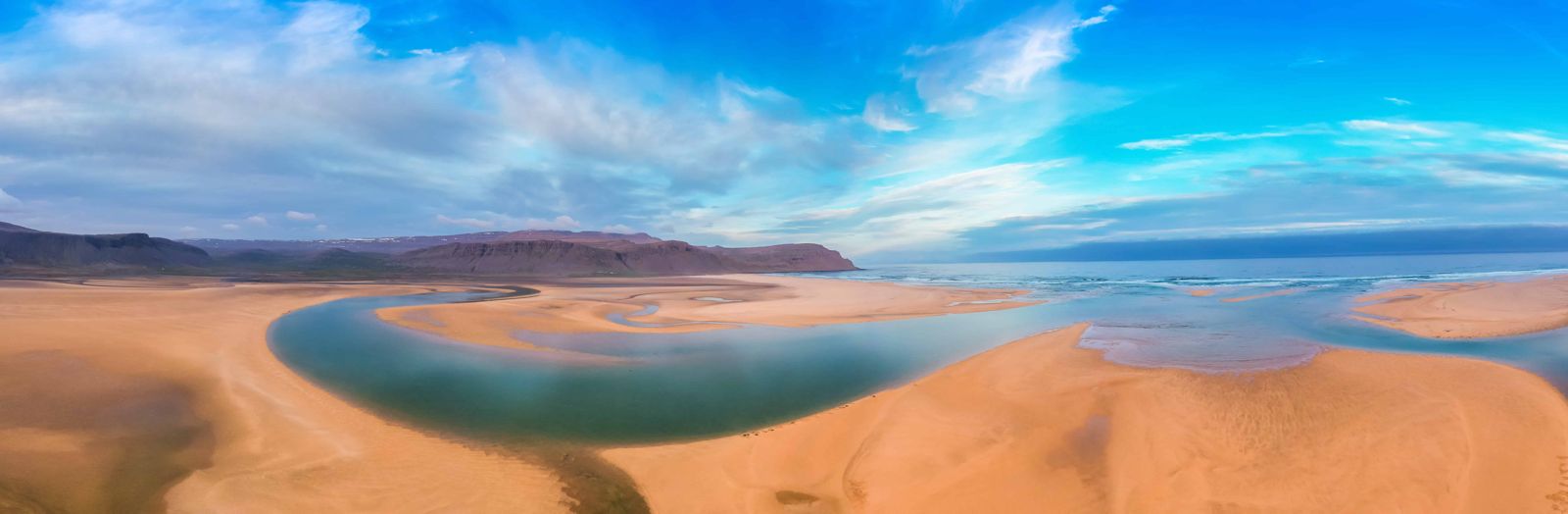
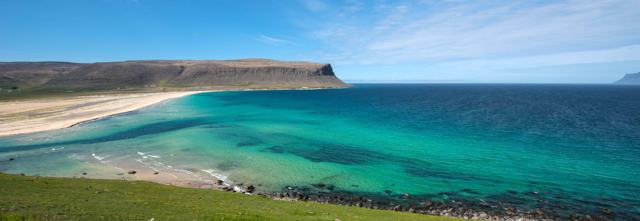
Rauðisandur is a roughly 10 km stretch of red and golden sand in the Westfjords, near the bird cliffs of Látrabjarg. It is free to visit, about 5 hours from Reykjavík by car, and the approach road is steep gravel, so most people allow a full day for the trip.
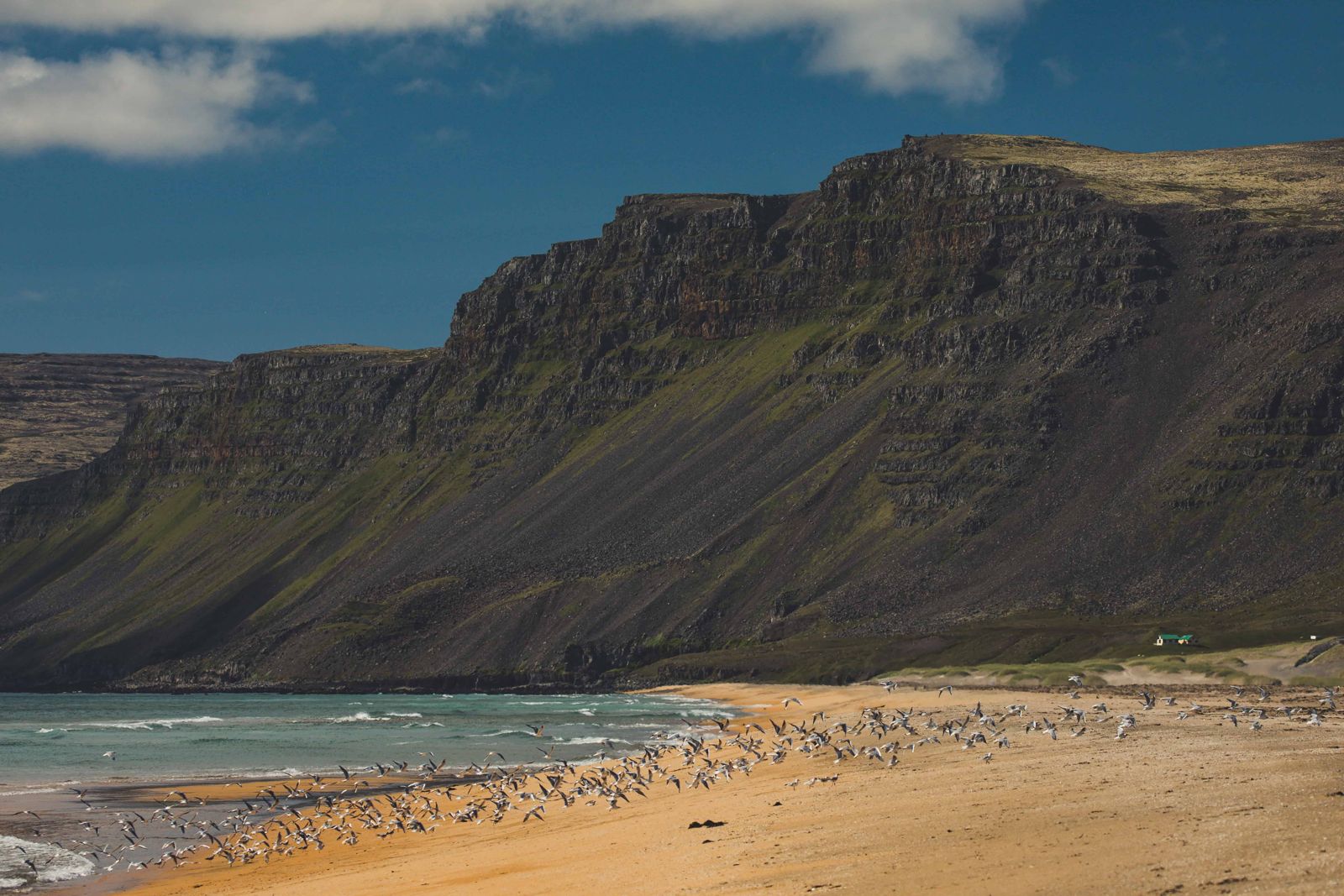
Unlike Iceland's better-known black sand beaches, Rauðisandur's colour shifts with the light and weather, from pale gold to a warm reddish hue, a mix of crushed shell and volcanic material washed up over centuries. The beach is wide and shallow, backed by grassy dunes and low hills, and at low tide it stretches out for a long way.
It sits on a remote stretch of the southern Westfjords, reached by a narrow, steep gravel road that is part of the experience, and often the reason it stays quieter than more accessible beaches elsewhere in Iceland.
Tall cliffs rise behind the sand, and Látrabjarg, one of the largest seabird cliffs in Europe, is a short drive further west. Guillemots, razorbills, fulmars and gulls nest there in huge numbers, and from around May to September you may see puffins flying over the beach and the hills towards Látrabjarg.
Grey seals and harbour seals often bob in the shallows or haul out on the sandbanks, and with luck you may see a whale further out. There are no organised activities on the beach, no snorkelling and no boat trips. People come for the walk, the colour and the quiet.
The sand looks so different from the black beaches elsewhere in Iceland because the Westfjords are the oldest part of the country and no longer volcanically active, so there is little fresh lava sand here. You will also see the name written Rauðasandur. Both forms mean "red sand".
The final descent to the beach is one of the steeper gravel roads in the region, with 180-degree turns and no barriers. Drive slowly, and avoid it in rain, in winter conditions or if you are not confident on gravel.
Rauðisandur is a long way from anywhere, so most people combine it with other stops in the southern Westfjords.
You can visit in any month of the year, but rain, ice and snow make the hairpin bends on Road 614 risky. In winter, check umferdin.is before you set out and turn back if the road looks bad.
A small café and campsite operate near the beach in summer; check current opening before relying on them.
Patreksfjörður has hotels, guesthouses and a campsite and is the closest base for visiting Rauðisandur. In summer there is also a campsite right by the beach.
Yes, there is no entrance fee, and parking is free.
A 4x4 is recommended for the steep gravel road down to the beach, though it is passable in a standard car in good, dry conditions.
About 5 hours by car, so most visitors combine it with other stops in the Westfjords rather than a day trip from the capital.
The colour comes from crushed shell fragments mixed with volcanic material, and it changes with the light and weather.
From Route 62, turn onto Route 612 towards Látrabjarg and then onto the gravel Road 614, which climbs over the mountain and drops steeply to the beach. Park in the small car park at the bottom and walk out across the sand.
Seals are often seen in the shallows and on the sandbanks. Puffins fly over the beach from around May to September, though the best place to see them up close is the Látrabjarg cliffs nearby.
The beach itself is open all year, but the gravel road with its hairpin bends becomes risky in rain, snow and ice and may be impassable. Only go in good conditions.
Tours and trips that include Rauðisandur, booked directly with a local travel agency in Iceland.