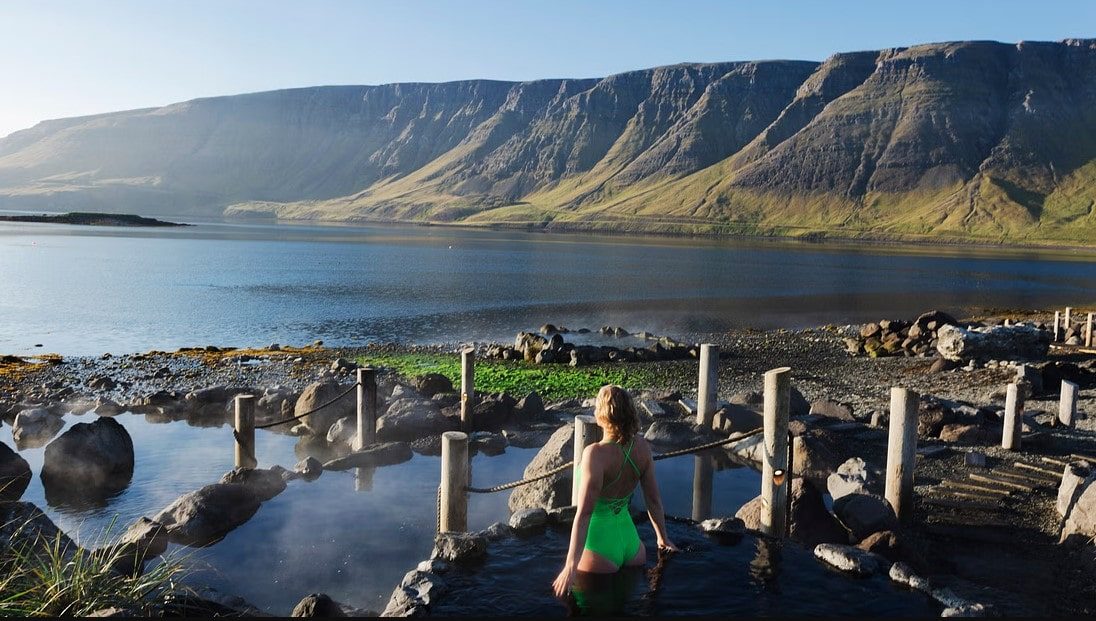
Iceland has dozens of hot springs you can bathe in, from big geothermal lagoons with bars and saunas, such as the Blue Lagoon and Sky Lagoon, to free natural pools in rivers and mountain valleys. Near Reykjavík the easiest are Sky Lagoon, the Blue Lagoon, Hvammsvík and the Reykjadalur hot river, and most lagoons are open all year, including winter. Below is our region-by-region guide with a map, 25 places worth the trip, what they cost, how to behave in the water and the hot spring tours that make it easy.
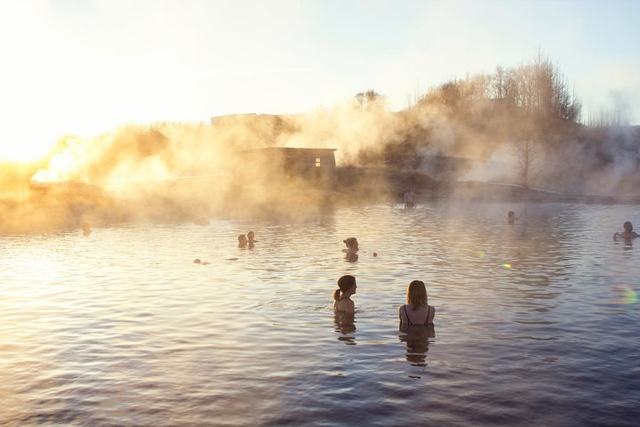
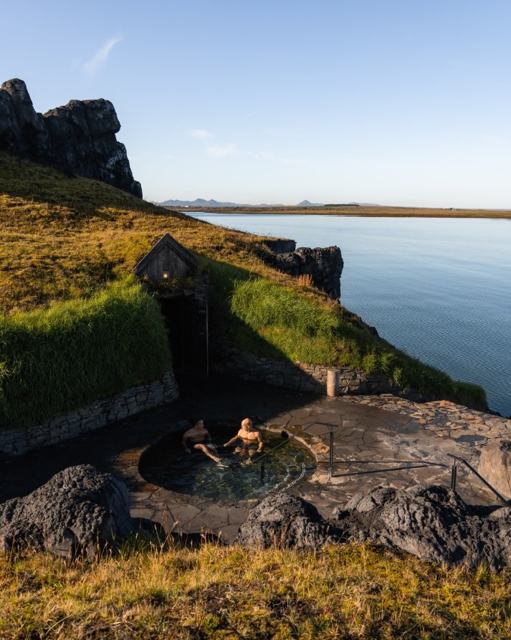
Iceland hot springs in short
If you only have time for one or two soaks, this is how we would choose. Every place below is described further down, in route order around the country.
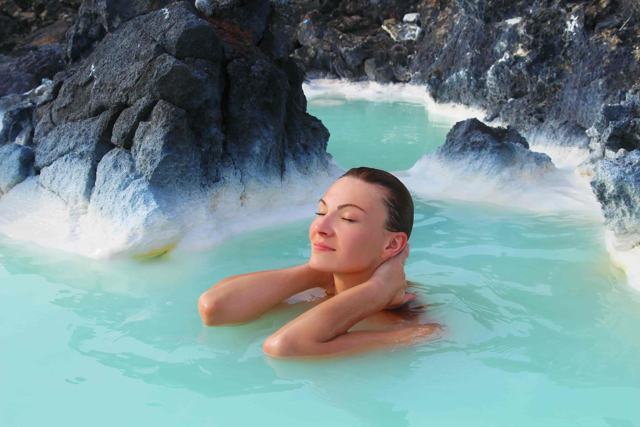
- Closest to Reykjavík: Sky Lagoon, 15–20 minutes from the centre, with the seven-step ritual.
- Best on the way to or from the airport: the Blue Lagoon on Reykjanes, booked ahead for a set time.
- Best by the sea: Hvammsvík in Hvalfjörður, eight pools at the shoreline, about 45 minutes from Reykjavík.
- Best on the Golden Circle: the Secret Lagoon in Flúðir, Laugarás Lagoon or Laugarvatn Fontana.
- Best free natural hot spring near Reykjavík: the Reykjadalur hot river, a 3 km walk above Hveragerði.
- Best in the highlands: Landmannalaugar, summer only.
- Best in North Iceland: Earth Lagoon Mývatn (formerly Mývatn Nature Baths), the Forest Lagoon by Akureyri and GeoSea in Húsavík.
- Easiest with no car: a tour with entry included, such as our Golden Circle and Secret Lagoon Tour.
Who this guide is for
This guide is for first-time visitors who want to fit a hot spring into a city break, a Golden Circle day or a Ring Road trip, and for travellers who want to find quieter natural pools. If you are choosing between the two big lagoons near the capital, read our Sky Lagoon vs Blue Lagoon comparison. If you want wild pools off the main roads, our hidden hot springs guide goes deeper.
Iceland hot springs map
Our interactive hot spring map shows 69 hot springs and geothermal areas, including 27 free natural pools, with filters for type and region and a short guide to access, cost and tips for each. The 15 with tickets on our site have a booking button that shows today's price. The map at the top of this post follows the 25 places below in route order, starting in Reykjavík and going round the country clockwise.
If you are driving yourself, you can also plan the route between the pools on Icelandmap, where each stop shows driving times.
Geothermal lagoons or natural hot springs?
Lagoons and spas are built pools fed by geothermal water. You get changing rooms, showers, lockers, towels to rent, often a sauna, a cold plunge and a bar. You pay an entry fee, usually book a time slot and can go in any weather. They are the easy, comfortable choice, especially in winter.
Natural hot springs are pools or warm rivers in the landscape. Some are free, some ask a small fee or donation, and facilities range from a simple changing hut to nothing at all. The water temperature depends on the weather and the season, some are reached on foot or only on mountain roads, and they can be crowded at midday in summer. They feel more like Iceland, but you need to plan.
Many visitors do one of each: a lagoon on arrival or departure day, and a natural pool such as Reykjadalur or Landmannalaugar on a day out.
Reykjavík and Reykjanes
The capital area has the two best-known lagoons and the most choice for a short stay. All of these are open all year, so they work well on a dark winter afternoon.
1. Sky Lagoon (Kópavogur, Reykjavík)
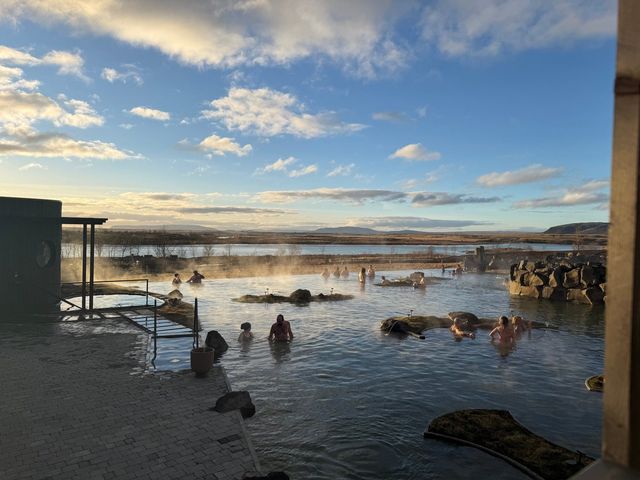
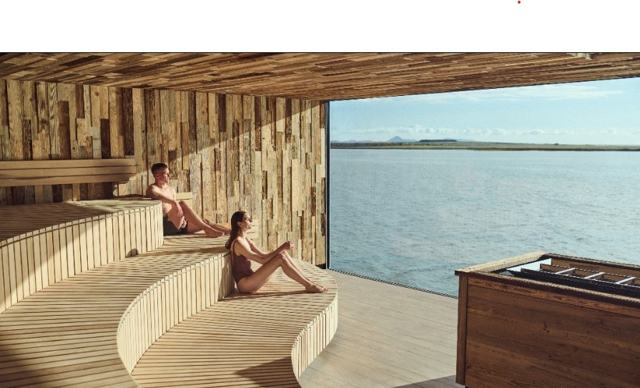
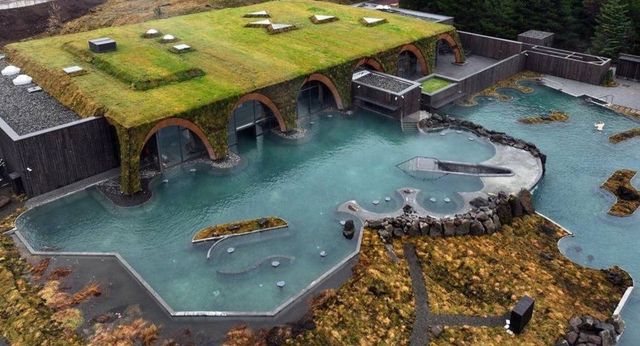
Sky Lagoon sits on the shore in Kópavogur, about 15–20 minutes from central Reykjavík, looking straight out over the ocean. Its signature is the seven-step Skjól ritual, which moves you between the warm lagoon, a cold plunge, a sauna, a scrub and a steam room.
There are two passes. The Saman Pass (from 14,990 ISK per person on our site today) includes the ritual and a towel with public changing rooms, and the Sér Pass (from 17,990 ISK) adds a private changing room with toiletries. Guests must be 12 or older, and 12–14-year-olds must be with an adult.
Sky Lagoon is a good choice for the first or last evening of a trip, and on clear winter nights you may see the Northern Lights from the water. Our Sky Lagoon and Northern Lights tour combines a soak with an aurora hunt.
2. The Blue Lagoon (Reykjanes)
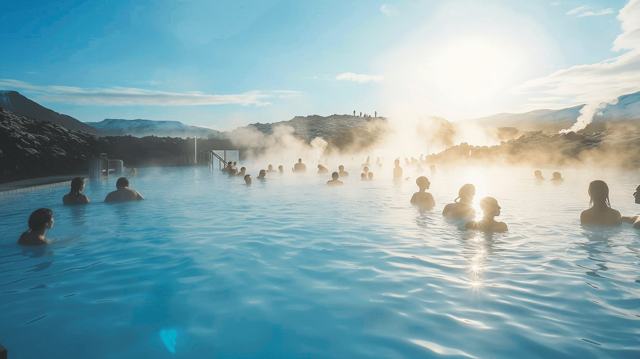
The Blue Lagoon lies in the lava field at Svartsengi on the Reykjanes peninsula, close to Keflavík Airport, so it fits neatly on an arrival or departure day. The milky blue water is a mix of geothermal seawater and fresh water at around 38°C, and the standard Comfort ticket includes a silica mud mask, a towel and a drink. Children aged 2–13 go in free with a parent, and booking ahead is essential.
The lagoon is close to the Sundhnúkur crater row, which erupted nine times between December 2023 and August 2025. When we checked the Icelandic Met Office on 12 November 2026, there was no eruption, land was still rising slowly at Svartsengi and a new eruption remained possible. The lagoon has closed for short periods during past eruptions, so check our weekly volcano update before you travel.
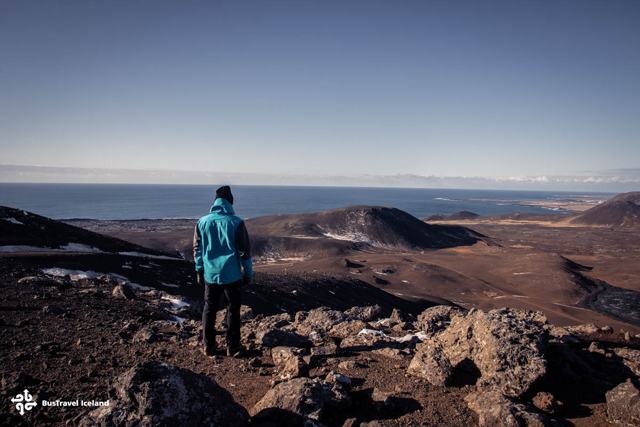
The simplest way to go is our Blue Lagoon Tour from Reykjavík with Comfort admission and return transfer, or the Volcano Hiking Tour and Blue Lagoon, which adds a guided walk to the Fagradalsfjall eruption area (from age 12).
3. Reykjanes on a private tour
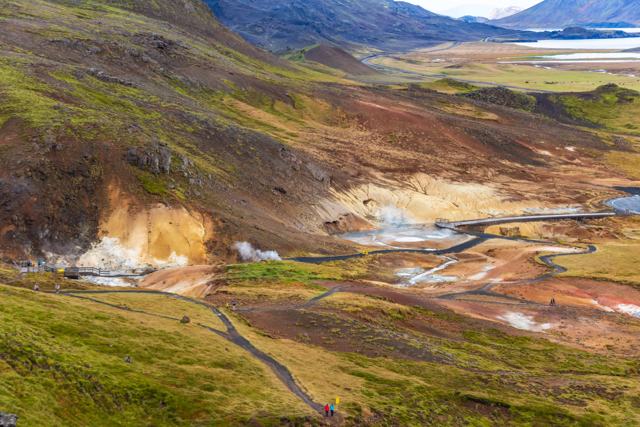
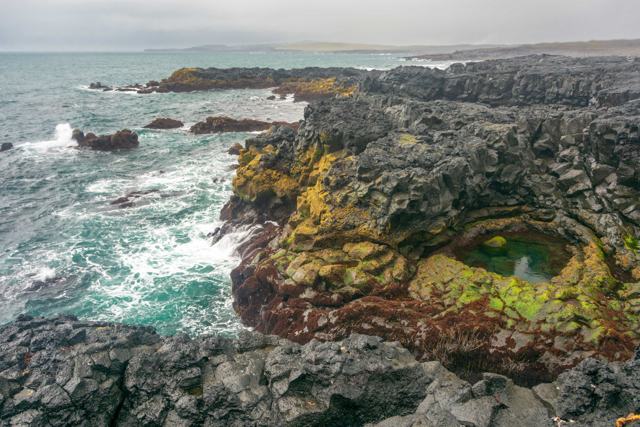
If you want to see the new lava fields, the coast and the geothermal areas at Seltún and Gunnuhver as well as the Blue Lagoon, our Reykjanes Peninsula Private Tour (about 6.5 hours, from 179,900 ISK per vehicle) gives you a guide and car for the whole group. The Blue Lagoon is a photo stop on that tour, with entry not included, so it is easy to add a booked soak at the end. Nearby, Brimketill is a sea-filled lava pool you look at rather than swim in, and Gunnuhver shows how hot the ground really is.
4. Hvammsvík Hot Springs (Hvalfjörður)
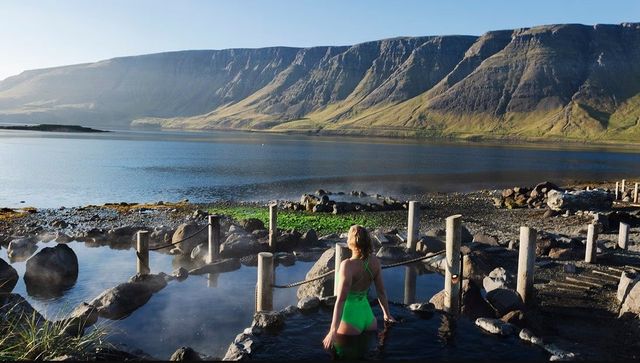
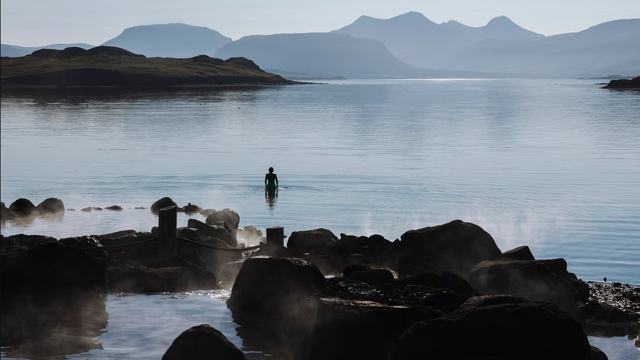
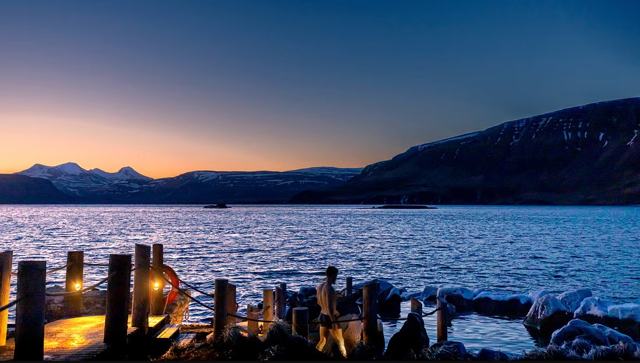
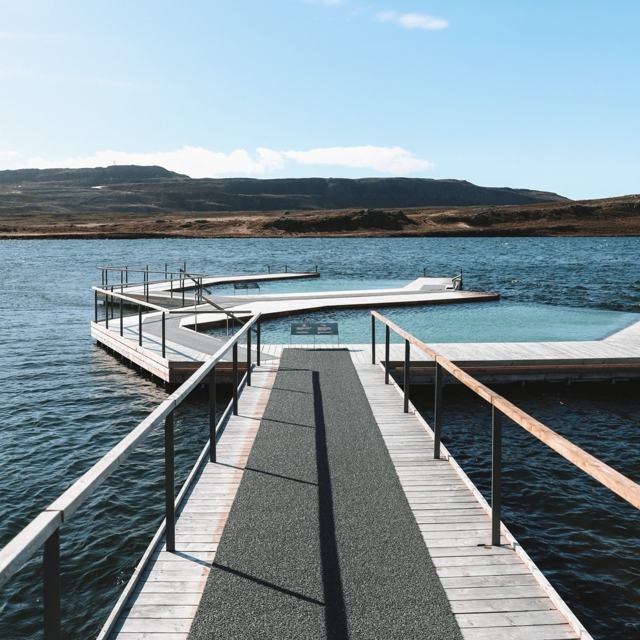
Hvammsvík is a set of eight hot springs right on the shore of Hvalfjörður, about 45 minutes north of Reykjavík. Some pools sit low enough to fill with seawater at high tide, so the temperature changes with the tide, from cool to about 35–37°C. There is a steam bath, a swim-up bar and the sea itself as a cold plunge, and paddleboards in summer when the weather allows.
Guests must be 10 or older. You can drive there with Hvammsvík admission (from 9,900 ISK per person on our site) or take the Hvammsvík transfer from Reykjavík (about 4.5 hours). For a full day, our Golden Circle and Hvammsvík Private Tour ends the Golden Circle with a soak by the fjord. More options are on our Hvammsvík tours page.
The Golden Circle and South Iceland
The Golden Circle area has the highest number of hot springs within reach of Reykjavík, from Iceland's oldest pool to brand-new lagoons. If you are planning the route itself, our Golden Circle guide has all the stops in order.
5. Reykjadalur hot river and Reykjaböð (Hveragerði)
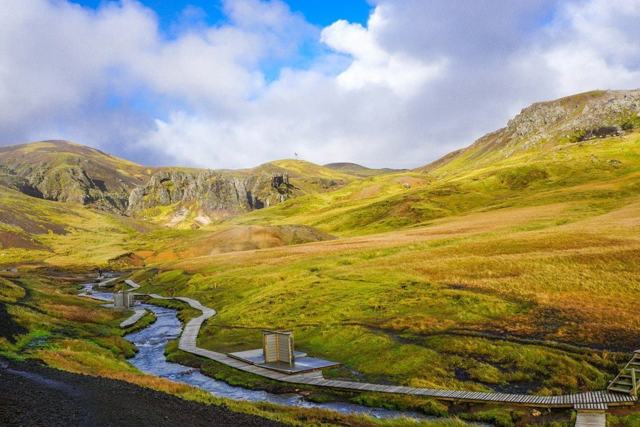
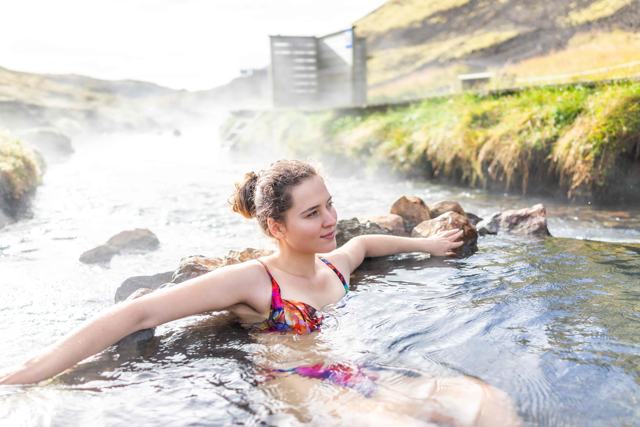
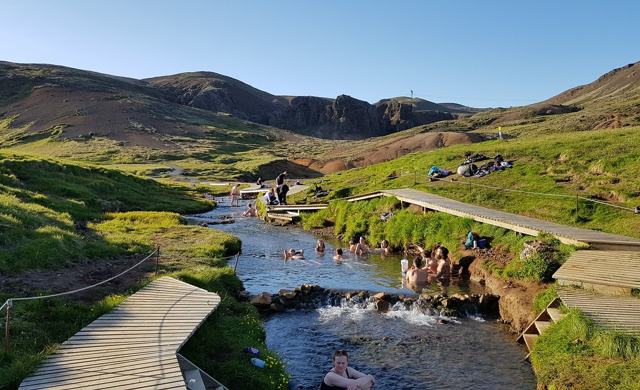
The Reykjadalur valley above Hveragerði, about 45 minutes from Reykjavík, is the most popular free natural hot spring near the capital. A geothermal stream mixes with a cold river, and you bathe along a wooden boardwalk with small changing screens. The walk in is about 3 km each way with around 340 m of climbing, past steaming vents and mud pots, and most people need 2.5–3.5 hours in total. Entry is free, but the car park charges by the hour through a parking app.
In winter the path can be icy and daylight is short, so our Reykjadalur Hot Spring Hiking Tour with a mountain guide (3–4 hours, from 19,990 ISK per person) is the safe way to do it. From September to April, the Reykjadalur Hot Springs and Northern Lights Tour walks in after dark with headlamps, from age 14. In summer you can also ride in on horseback.
At the foot of the valley, Reykjaböð is a newer bathing place with outdoor hot spring pools and a Nordic bathhouse. We have written a separate Reykjaböð guide with prices and passes.
6. The Secret Lagoon (Flúðir)
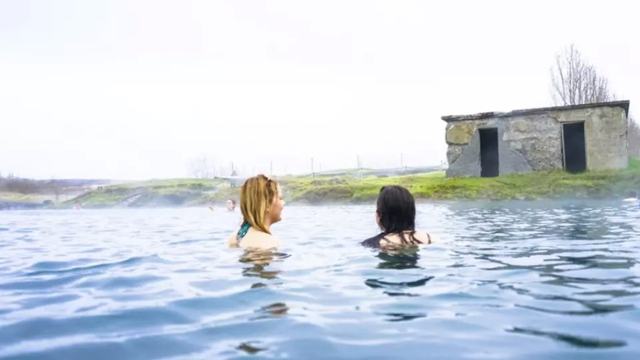
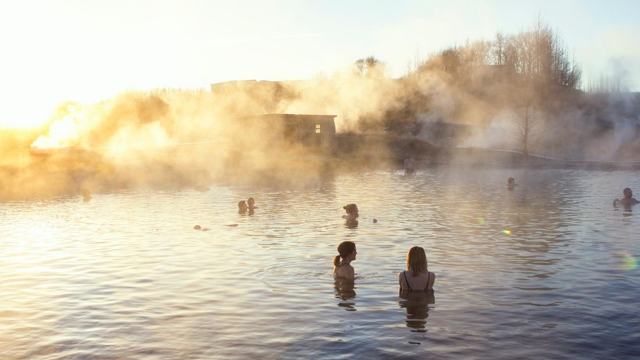
The Secret Lagoon, or Gamla laugin, in the village of Flúðir is Iceland's oldest swimming pool, built in 1891. It is a simple natural pool at about 38–40°C, fed by hot springs around it, including the little geyser Litli Geysir, which bubbles up every few minutes. It is relaxed, not fancy, and good for families.
When we checked the lagoon's own site, adult entry was 4,500 ISK and children aged 14 and under paid a small fee, with winter opening from 10:00 to 19:00. Most people visit on a Golden Circle day: our coach Golden Circle and Secret Lagoon Tour (from 15,990 ISK per person, from age 2) includes entry to the lagoon and to Kerið crater, and the small-group Golden Circle and Secret Lagoon Tour takes up to 19 people with hotel pick-up. See all options on our Secret Lagoon page.
7. Hrunalaug (near Flúðir)
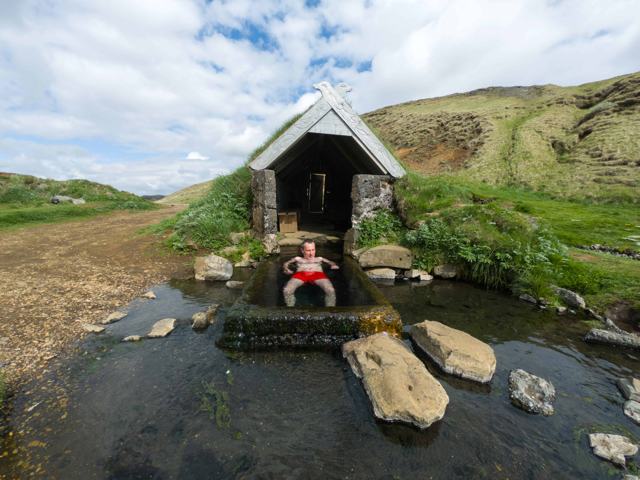
A few minutes outside Flúðir, Hrunalaug is a small natural pool on private farmland. It is no longer a free secret: the owners charge an entry fee (3,000–3,500 ISK for adults when we checked, card or cash), set a 1.5-hour limit and keep winter hours of 10:00–20:00. It is tiny, so go early or late, and treat it gently.
8. Laugarás Lagoon
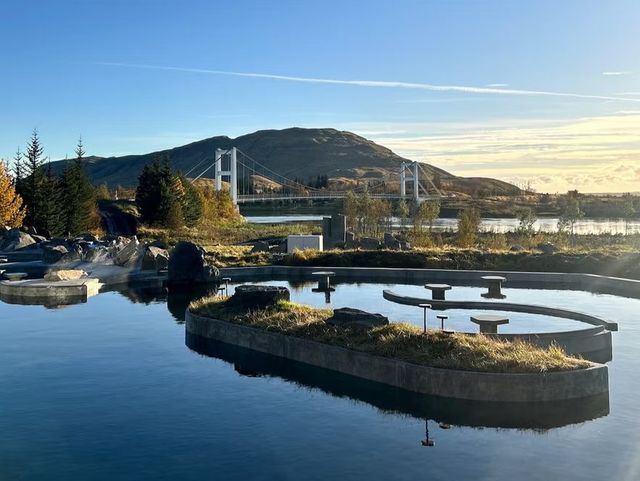
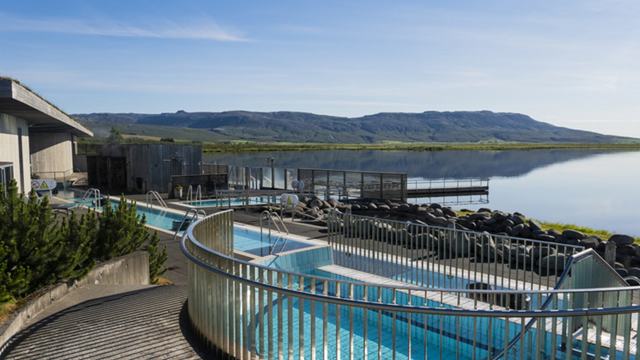
Laugarás Lagoon is one of the newest lagoons in Iceland, by the Hvítá river, between Flúðir and Skálholt, about 80 minutes from Reykjavík. It is a two-level lagoon with a waterfall, a cave, saunas, a swim-up bar and a restaurant, and it is open all year (10:00–20:30 in winter). There are three passes, from lagoon-only entry to a pass with a meal.
Our Golden Circle and Laugarás Lagoon Tour (from 24,990 ISK per person, minimum age 8) includes a Lerki ticket with a towel and a drink, and the Private Golden Circle and Laugarás Lagoon Tour gives you your own guide and vehicle. Read more in our Laugarás Lagoon guide.
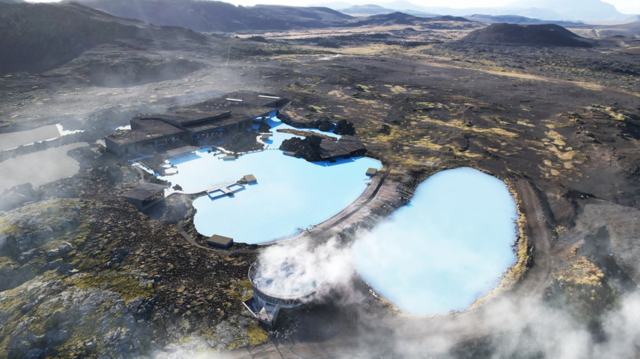
9. Laugarvatn Fontana
Laugarvatn Fontana sits on the shore of Lake Laugarvatn, between Þingvellir and Geysir. It has warm pools, natural steam rooms built over a hot spring and access to the lake for a cold dip, and it is known for rye bread baked in the hot ground. Adult entry is 7,490 ISK on our site, children under 12 must be with an adult and the baths are open daily all year. It is the easiest stop to add if you are driving the Golden Circle yourself.
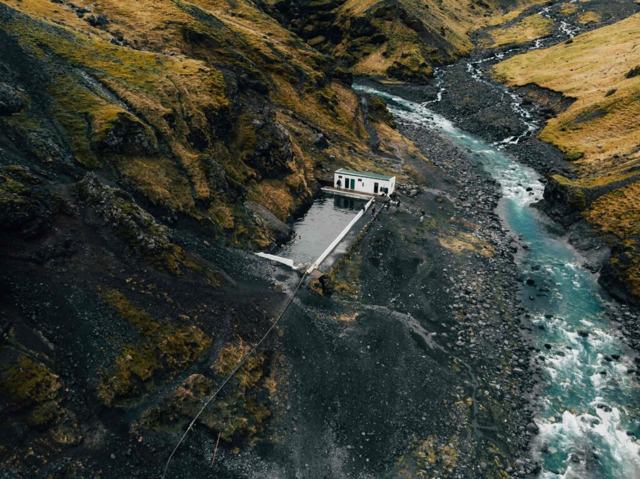
10. Seljavallalaug (South Coast)
Seljavallalaug is an old outdoor pool in a valley under Eyjafjallajökull, a 15–20 minute walk from the road. It is free, with a donation box, and open all year. The water is only lukewarm, often 20–35°C, and the pool is cleaned by volunteers once a year, so go for the setting rather than the warmth. There is a basic changing hut and no showers.
The highlands (summer only)
The highland hot springs are the wildest, and the roads to them are mountain F-roads that only open in summer, usually from late June to early September. Outside that season the roads are closed to normal traffic.
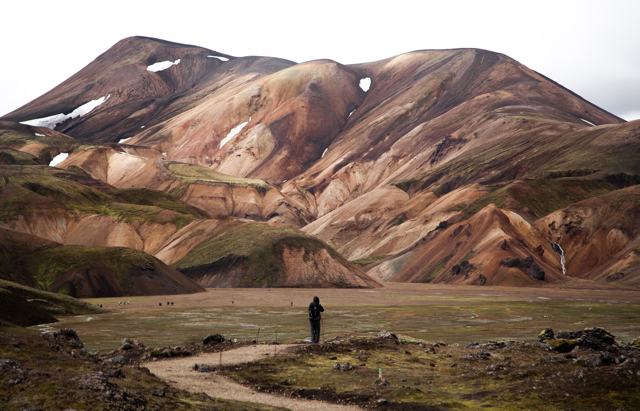
11. Landmannalaugar
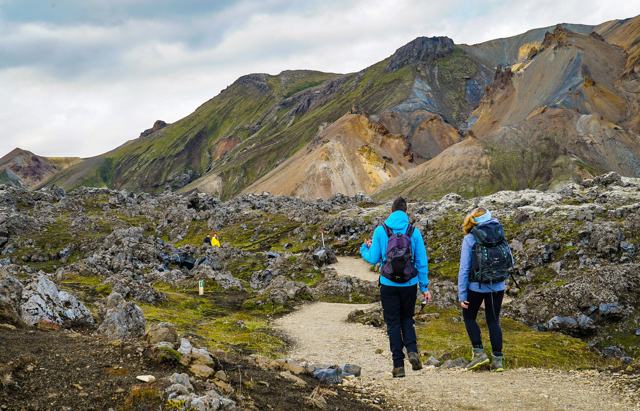
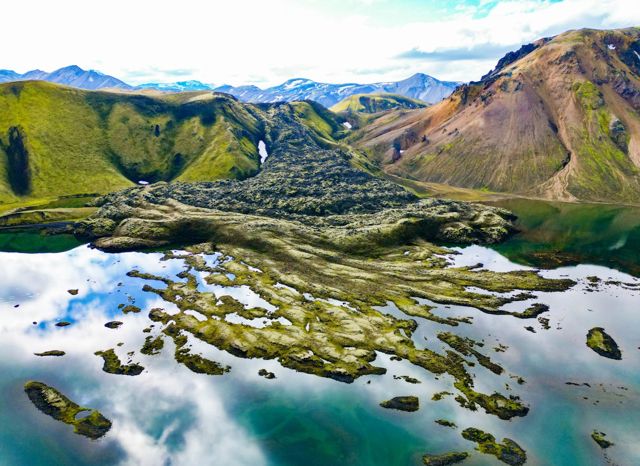
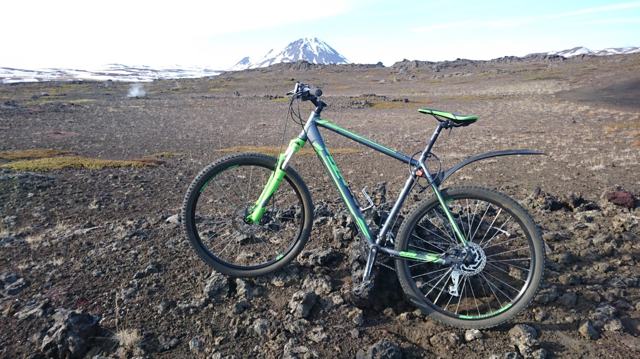
Landmannalaugar in the Fjallabak nature reserve is a hot river at the edge of a lava field, below rhyolite mountains streaked with orange, green and grey. You bathe in a warm stream just behind the huts, ideally after a hike in the hills.
Getting there needs a 4×4 on road F208, with river crossings near the end, and there is a service fee per car. Our Landmannalaugar Tour from Reykjavík (about 13 hours, normally mid-June to early September, from age 6) includes a guided hike and the bathing, and the Landmannalaugar Private Tour by super jeep runs from the beginning of June to the end of October. All options are on our Landmannalaugar tours page.
12. Hveravellir and Kerlingarfjöll
On the Kjölur route (F35) across the middle of the country, Hveravellir has a natural pool beside a geothermal field, with a small service fee that covers toilets, showers and the pool. Not far away, Kerlingarfjöll has the Highland Baths at the mountain lodge, open to day visitors from mid-June to the end of September. Both are on F-roads that need a 4×4 and are open only in summer.
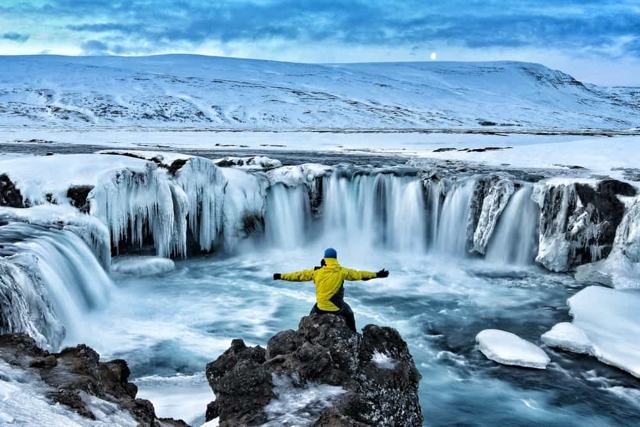
13. Vök Baths (East Iceland)
Vök Baths near Egilsstaðir are pools that float on Lake Urriðavatn, filled with hot spring water with no chlorine. You can move between hot pools at up to 41°C and the cold lake, and there is a sauna, a cold tunnel and herbal tea from the hot water. Vök Baths admission is from 7,690 ISK per person, the baths are open all year, and they are a welcome stop on a long Ring Road day. Near Egilsstaðir, the free Laugavallalaug waterfall pool is reached by 4×4 in summer.
North Iceland
The North has three of the best lagoons in the country and it is quieter than the south, especially in winter. See all our North Iceland tours for day trips from Akureyri.
14. Earth Lagoon Mývatn (formerly Mývatn Nature Baths)
The lagoon above Lake Mývatn, long known as Mývatn Nature Baths, is now called Earth Lagoon Mývatn, and in July 2026 it announced a new section with caves, a steam cave and a swim-up bar. The water is milky blue like the Blue Lagoon, at 36–40°C, and it is usually far less busy. Earth Lagoon Essential admission is from 7,900 ISK per person, children aged 5 and under go in free with an adult, and it is open all year.
On a Ring Road trip it fits at the end of a day around Mývatn. From Akureyri, our Goðafoss Waterfall and Earth Lagoon Tour includes entry (May to September), and the Biking and Hot Spring Tour in Mývatn ends with about an hour in the lagoon.
15. GeoSea (Húsavík)
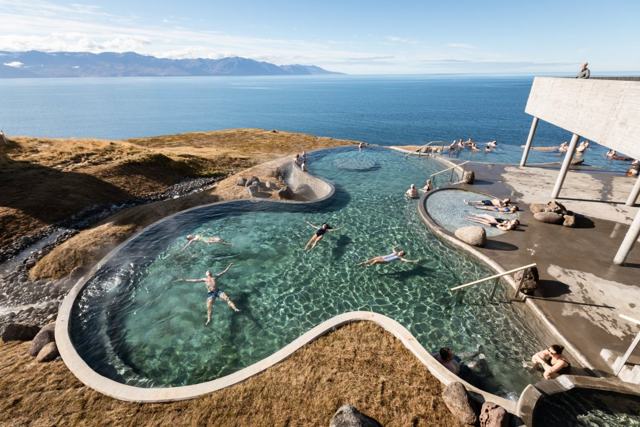
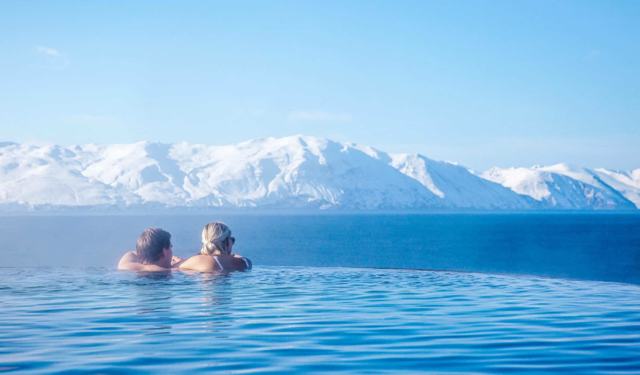
GeoSea is built on the cliffs at the edge of Húsavík, with geothermally heated seawater at 38–39°C and a view over Skjálfandi Bay, where whales feed in summer. The GeoSea ticket is from 7,490 ISK per person, children under 5 go free and it is open all year. In winter, our Northern Lights and GeoSea Sea Baths Tour from Akureyri (about September to April, minimum two people) combines a soak with an evening aurora hunt.
16. The Forest Lagoon (Akureyri)
The Forest Lagoon sits in the Vaðlaskógur forest across the fjord from Akureyri, about five minutes' drive from the town. It has warm pools with swim-up bars, a Finnish sauna and a cold pool, and it stays open late, until midnight when we checked. It is the easiest lagoon for an evening in Akureyri. Our Diamond Circle Tour from Akureyri can drop you there on the way back, with entry paid separately.
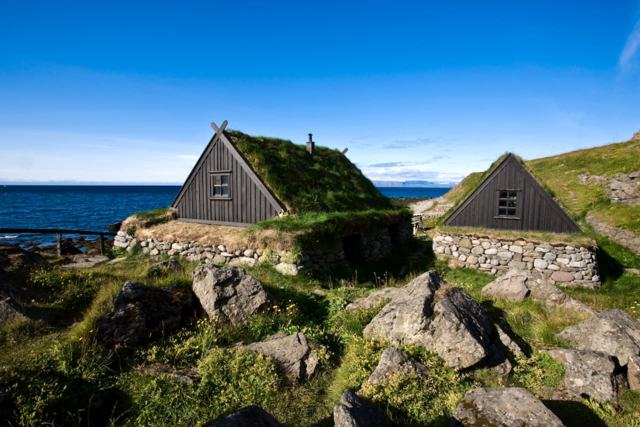
17. Hofsós and Grettislaug (Skagafjörður)
In Skagafjörður, the Hofsós swimming pool is a small village pool with a view out over the fjord. Further north, Grettislaug has stone hot pots by the sea, named after the saga outlaw Grettir, with a café nearby. Grettislaug is usually open from April to mid-October.
18. Westfjords hot pots
The Westfjords have many free hot pots, and several sit right by the sea. Hellulaug by Flókalundur is a natural pool of about 38°C, Pollurinn above Tálknafjörður has several tubs and a changing cabin, and the Drangsnes hot tubs sit on the shore, with showers in the changing house across the road. All of these are free or ask for a donation.
Most of the Westfjords is best visited from June to September. Our 3 Day Westfjords Tour from Reykjavík (June to September) takes in Dynjandi, Látrabjarg and Rauðisandur, with an optional evening at Hellulaug.
19. Landbrotalaug (Snæfellsnes)
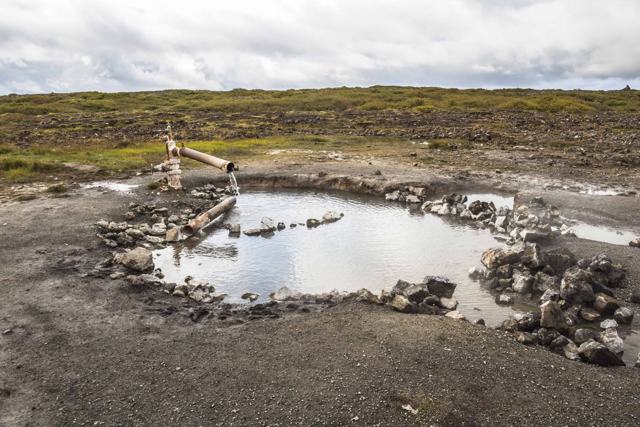
Landbrotalaug is a tiny natural pool in the lava near Eldborg crater, on the way to Snæfellsnes with room for only a few people. It is free and on private land, so access depends on the landowner. There are no facilities, so leave nothing behind.
20. Krauma and the Húsafell Canyon Baths (West Iceland)
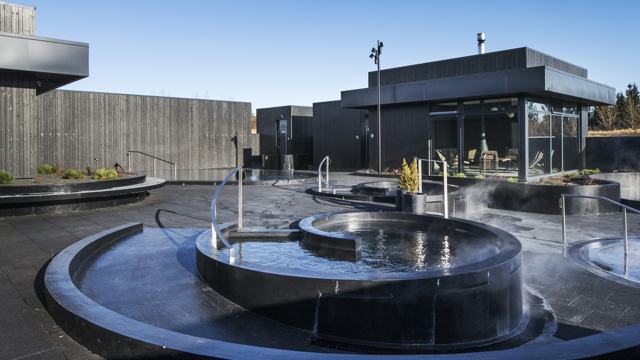
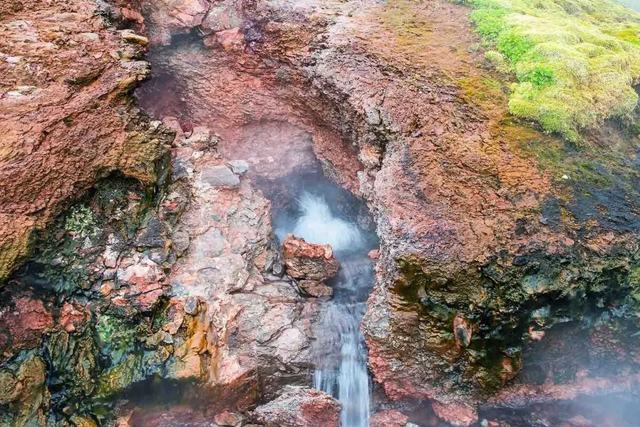
Krauma sits next to Deildartunguhver, the hot spring with the greatest flow in Europe, about 97 km from Reykjavík. Its baths mix boiling spring water with cold glacier water, with no added chemicals, and there are saunas, a cold tub and a relaxation room. Krauma admission is from 7,900 ISK per person, for all ages.
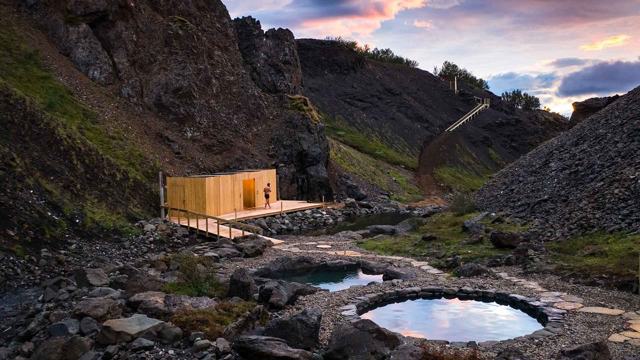
Further up the valley at Húsafell, the Canyon Baths are two small pools in a river gorge, reached only on a guided walk of about 1 hour 45 minutes, in groups of up to 16. You can join at Húsafell with Húsafell Canyon Baths admission, or go for the whole day on our Silver Circle and Húsafell Canyon Baths Tour from Reykjavík (about 10 hours, from age 6), which also visits Hraunfossar and Barnafoss.
21. Village swimming pools
Do not skip the local pools. Almost every town has a geothermal swimming pool with hot tubs, a steam room and often a waterslide, open all year and costing a fraction of a lagoon ticket. They are where Icelanders actually soak, chat and meet neighbours, and they are a good option on a budget or with children.
Hot spring etiquette: the rules that matter
Icelandic pools and lagoons have one rule that surprises visitors: you must shower without your swimsuit and wash with soap before you go in. Staff check, and the water stays clean because almost no chemicals are added. Most places have private shower cubicles if you are shy.
- Shower naked and wash with soap before entering any pool or lagoon.
- Leave shoes outside the changing room, and dry off before walking back in.
- At natural springs, change behind screens or in the hut, take all rubbish home and never use soap or shampoo in the water.
- Do not dig into riverbeds, move rocks to change the flow or build new pools.
- Stay on marked paths in geothermal areas and keep children close.
- Ask before you take photos of other bathers.
Safety at natural hot springs
The Environment Agency of Iceland warns that water and mud in geothermal areas can be above boiling point, and that a thin crust near hot springs can break if you step on it. That is why every natural spring has marked paths and bathing areas: stay on them, test the water with your hand first and move downstream if it is too hot.
In winter, add ice and short days to the list. Paths to Reykjadalur and Seljavallalaug can be icy, so bring ice spikes and a headlamp, or go with a guide. Always check the weather on vedur.is and road conditions on umferdin.is before driving out, and see our weekly road and weather update.
Hot springs by season
Winter (November to March): the lagoons are at their best, with snow on the rocks, steam in the cold air and, on clear nights, a chance of the Northern Lights. Natural springs at low level stay open, but highland ones are closed and paths can be icy. A guided tour is the easiest way to combine a soak with an aurora hunt; see our Northern Lights tours.
Spring and autumn (April, May, September, October): quieter lagoons, cheaper times and slots easier to book. Highland roads open late June and close in September.
Summer (June to August): long light evenings, all the highland and Westfjords pools open, and the busiest lagoons, so book Blue Lagoon, Sky Lagoon and Vök ahead. Midnight soaking is a real summer pleasure.
What hot springs in Iceland cost
Prices change with the season and the time slot, so treat these as a guide and check the booking page on the day.
- Big lagoons near Reykjavík: Sky Lagoon from 14,990 ISK and the Blue Lagoon from about 10,000 ISK for entry only on the lagoon's own site, more with transfers.
- Regional lagoons and baths: about 7,500–10,000 ISK, for example Laugarvatn Fontana, Krauma, Earth Lagoon, GeoSea, Vök and Hvammsvík.
- Small paid natural pools: Secret Lagoon about 4,500 ISK, Hrunalaug 3,000–3,500 ISK.
- Free natural springs: Reykjadalur (parking fee only), Seljavallalaug and many Westfjords hot pots (donation box).
- Village swimming pools: usually the cheapest hot tub in town.
- Tours with entry included: from 15,990 ISK per person for the Golden Circle and Secret Lagoon by coach.
What to bring
A swimsuit, a quick-dry towel (most lagoons rent towels, natural springs do not), flip-flops for the walk from the changing room, a hat for winter soaking and a waterproof bag for wet clothes. For hikes to natural springs, add walking boots, a warm layer for the walk back, water and, from November to March, ice spikes and a headlamp. Many people wear their swimsuit under their clothes on the way up to Reykjadalur, to make changing quicker. Our winter packing list has the rest.
Our local tips for Iceland's hot springs
- Put conditioner in your hair before you go into the Blue Lagoon, Earth Lagoon or GeoSea. The silica and sea minerals leave long hair stiff for days.
- Take off silver and copper jewellery before you get in. Sulphur in some springs can tarnish it.
- In winter, book a lagoon for the late afternoon. You get daylight on the drive and dark skies in the water.
- Do not plan a long drive straight after a soak. Hot water makes you sleepy, so it is best at the end of the day.
- On a Golden Circle day, the hot spring is the stop people remember. Choose a tour with entry included so you do not have to queue or book separately.
Common mistakes to avoid
- Turning up at the Blue Lagoon, Sky Lagoon or Vök in summer without a booking.
- Trying to drive a small car to Landmannalaugar or Kerlingarfjöll, or going in winter when the F-roads are closed.
- Hiking to Reykjadalur in December in trainers and without a headlamp.
- Soaking in the hottest water for too long. Get out, cool down and drink water.
- Wading into unmarked pools in geothermal areas. If there is no sign, a path or a changing place, it is probably not for bathing.
Our local recommendation
For most first-time visitors we suggest two soaks: one big lagoon and one natural hot spring. In winter, that could be Sky Lagoon on your first evening and the guided Reykjadalur hike or a Golden Circle day with the Secret Lagoon. In summer, add Landmannalaugar, or a Ring Road trip with Earth Lagoon at Mývatn and Vök in the East.
If you are travelling as a family or a group, a private tour is often the best value: our Golden Circle Private Tour (from 120,000 ISK per vehicle) can add the Secret Lagoon as an extra, and the guide times the soak for when it is quietest. If you would rather drive, our South Coast and Glacier Lagoon self-drive in 5 days includes the car and hotels, with a 4×4 from October to April, and lagoon tickets can be added in our trip planner.
Tours to book
These are the hot spring tours we recommend most often. Entry is included unless we say otherwise, and all of them run all year unless a season is given. Browse every option on our hot springs tours page.
- Golden Circle and Secret Lagoon Tour, from 15,990 ISK per person: the classic day out with the Secret Lagoon and Kerið included.
- Reykjadalur Hot Spring Hiking Tour, from 19,990 ISK per person: a guided hike to the hot river, the safe way in winter.
- Golden Circle and Hvammsvík Private Tour: your own guide and car, ending with a soak by the fjord.
- Sky Lagoon Saman Pass, from 14,990 ISK per person: the seven-step ritual, 15–20 minutes from the city.
The places on the map
Tap a pin for the place guide. Plan this route on Icelandmap
Questions people ask
What is the best hot spring in Iceland?
It depends on your trip. Sky Lagoon and the Blue Lagoon are the best-known lagoons near Reykjavík, Hvammsvík is the best by the sea, Reykjadalur is the best free natural hot spring near the capital, and Landmannalaugar is the best in the highlands in summer.
Are there free hot springs in Iceland?
Yes. Reykjadalur near Hveragerði is free to bathe in (you pay for parking), Seljavallalaug on the South Coast has a donation box, and many hot pots in the Westfjords, such as Hellulaug and Pollurinn, are free.
Can you go to hot springs in Iceland in winter?
Yes. All the main lagoons are open all year, and winter is a lovely time to soak. Highland springs such as Landmannalaugar are closed from about September to June because the roads close, and paths to natural springs can be icy.
What is the closest hot spring to Reykjavík?
Sky Lagoon in Kópavogur, about 15–20 minutes from the city centre. The closest natural hot spring is Reykjadalur, about 45 minutes away plus a 3 km walk.
Do I have to shower naked before going in?
Yes. At every pool and lagoon in Iceland you must shower without a swimsuit and wash with soap before you go in. Most places have private cubicles.
Is the Blue Lagoon open?
When we checked on 12 November 2026 there was no eruption and the lagoon was taking bookings. It has closed for short periods during past eruptions nearby, so check our weekly volcano update before you travel.
Can children go to hot springs in Iceland?
Yes, but age limits vary: the Blue Lagoon takes children from age 2, Hvammsvík from 10 and Sky Lagoon from 12. The Secret Lagoon, Laugarvatn Fontana, Earth Lagoon, GeoSea and Vök welcome all ages, and village pools are the most child-friendly of all.
Which hot spring tour should I book?
For one easy day, the Golden Circle and Secret Lagoon Tour. For a natural hot spring, the guided Reykjadalur hike. For a family or group, a private Golden Circle tour with a lagoon added.