South IcelandHot springFree to batheHike requiredOpen all year
Written by locals at Iceland Travel Guide · Checked by Heiða · Updated November 2026
REYKJADALUR IN SHORT
Reykjadalur hot spring ("Steam Valley") is a geothermal river in the hills above Hveragerði in South Iceland, about 45 km or 45 minutes from Reykjavík. You walk about 3 km each way with roughly 340 m of climbing to a wooden boardwalk where you bathe in naturally warm water. Bathing is free, the car park charges by the hour, and the hike plus a soak takes 2.5–3.5 hours.
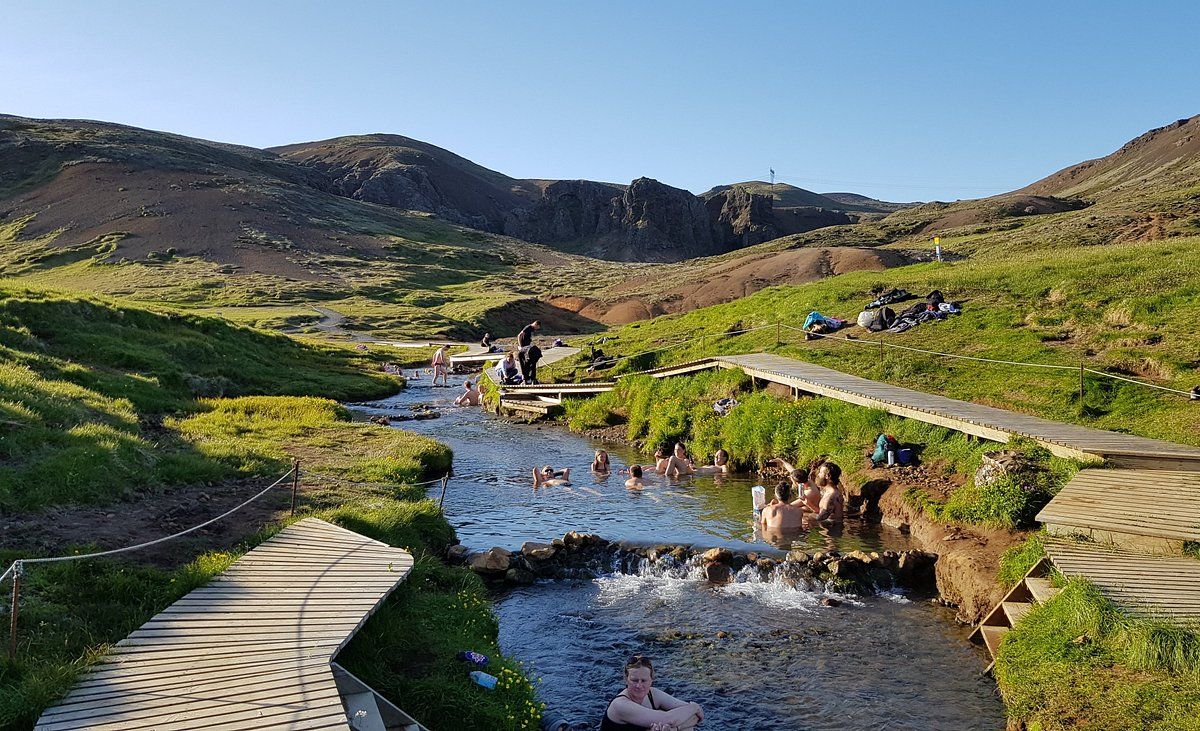
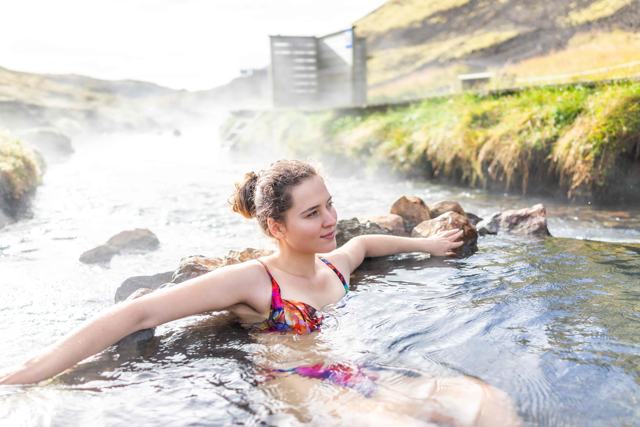
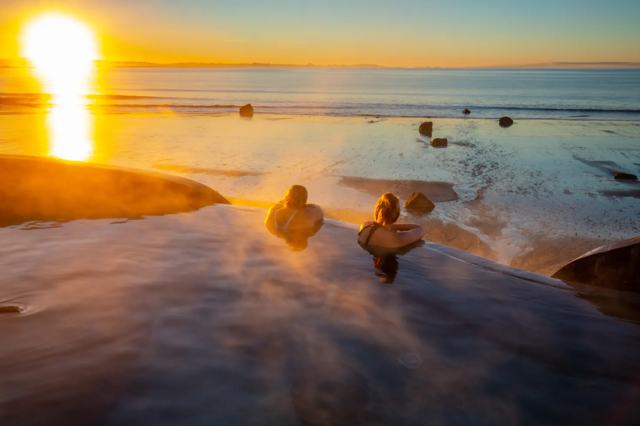
Reykjadalur is the best-known natural hot spring close to Reykjavík, and one of the few you can reach without a 4×4 or a long drive. A cold mountain stream meets hot water from springs higher up the valley, so the river is warmest upstream and cooler further down. Wooden boardwalks and simple screens mark the main bathing stretch, so you can pick the temperature that suits you.
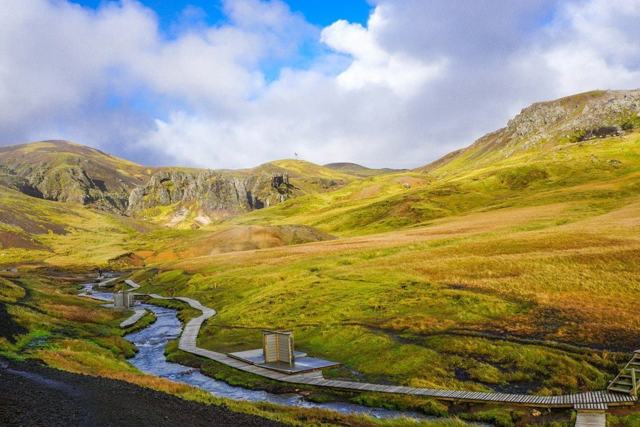
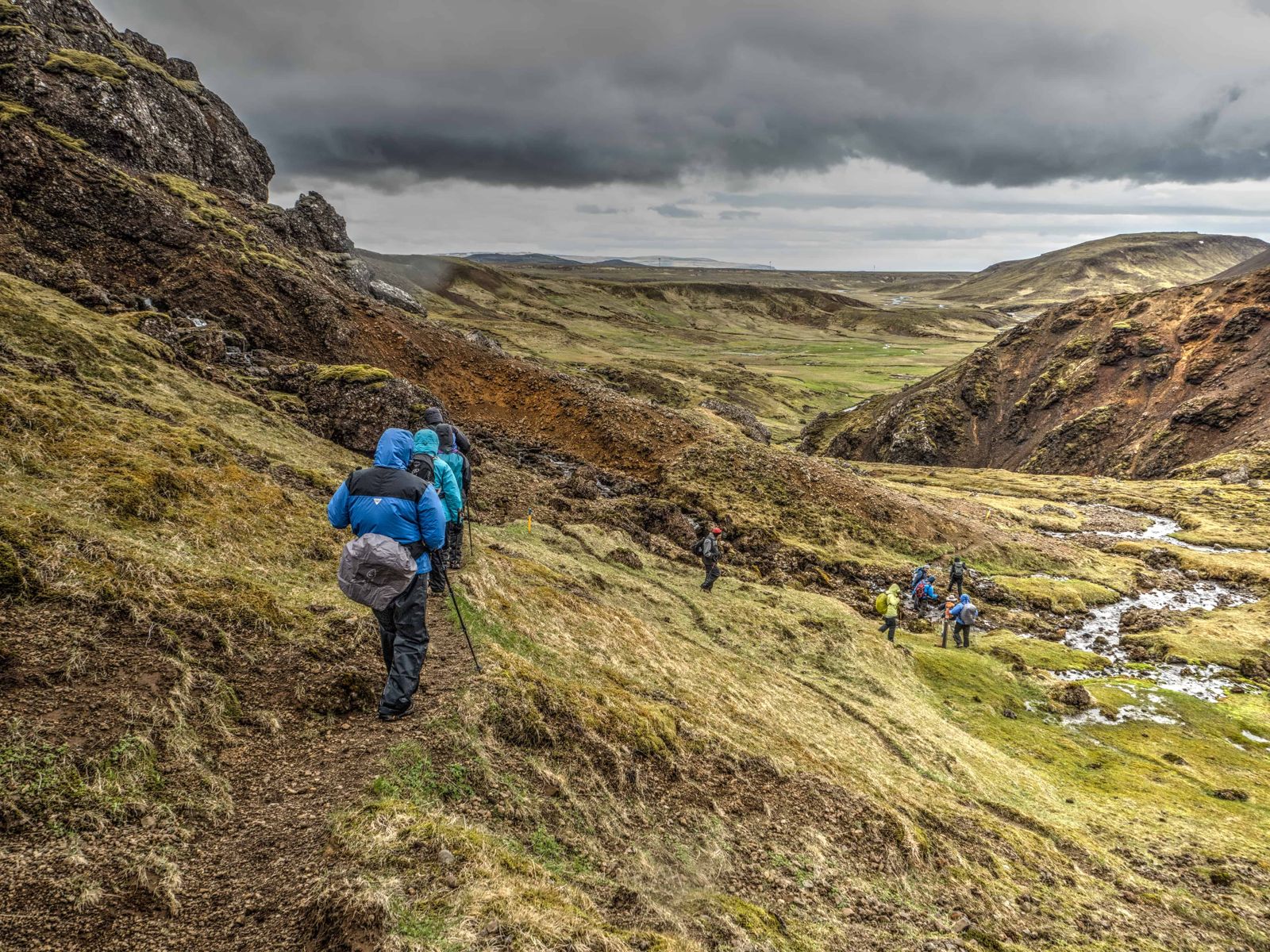
The walk up is part of the experience. The path climbs steeply for the first part, then follows the valley past steaming vents, bubbling mud pots and ground stained yellow and red by minerals, with views back over Hveragerði and the South Iceland lowlands. Along the way you can also see Djúpagilsfoss waterfall and the Klambragil gorge. It is a real hike, not a stroll, so allow time to take it slowly and enjoy it.
In winter the valley is quieter and often snowy, and soaking in warm water with snow on the banks is a highlight for many visitors. It is also when the path is hardest, with ice, wind and only a few hours of daylight in December, which is why many people choose a guided hike from November to March.
Quick facts
RegionSouth Iceland, above Hveragerði
From ReykjavíkAbout 45 km, around 45 minutes by car to the trailhead
Hike distanceAbout 3 km one way, roughly 340 m of climbing
Hike timeAbout an hour up, 30–45 minutes down
EntryFree to bathe
ParkingPaid by the hour at the trailhead, by app or card machine
Opening hoursOpen all year, no set hours
Time needed2.5–3.5 hours including the hike and bathing
How to get to Reykjadalur
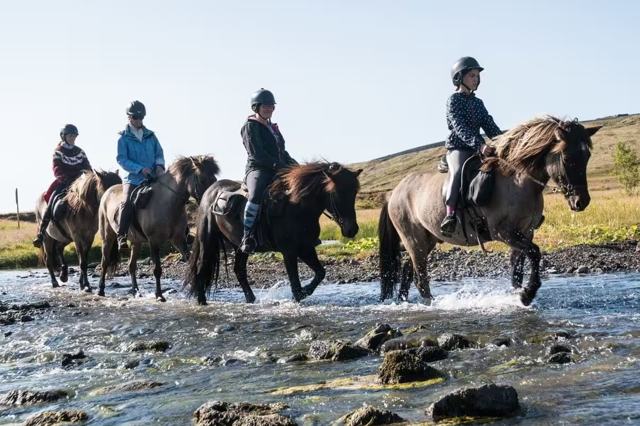
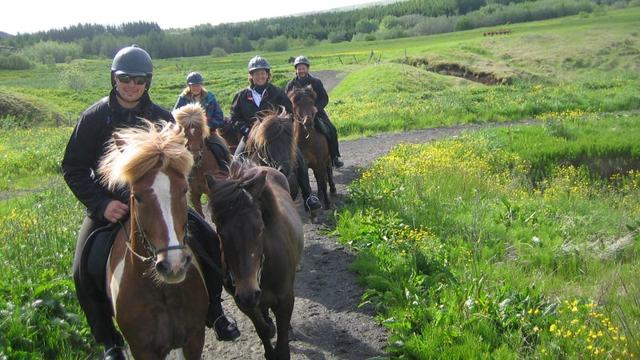
On a guided tourThe easy way is our Reykjadalur Hot Spring Hiking Tour: a mountain guide walks you up the valley, explains the geothermal area and shows you the best bathing spots, in 3–4 hours from the trailhead car park (pick-up in Reykjavík can be added). From September to April, our Reykjadalur Hot Springs and Northern Lights Tour picks you up in Reykjavík and walks in after dark with headlamps, from age 14, and in summer (May to September) you can ride in on horseback on our Reykjadalur horse riding tour. With a guide you do not have to find the trail in snow or worry about the icy sections on the way down.
By carTake Route 1 east from Reykjavík over Hellisheiði to Hveragerði, about 45 minutes, then follow the signs north through the town to the Reykjadalur car park, about 2 km above the town. The road is paved and open all year, but Hellisheiði can close for a few hours in winter storms, so check umferdin.is before you leave.
By public transportStrætó buses run from Reykjavík to Hveragerði, but you still need to walk about 2 km from town to the trailhead before the hike starts, so most visitors without a car take a tour.
ParkingThe car park at the trailhead holds around 100 cars and charges by the hour, paid through a parking app or the card machine on site. Plan for at least three hours of parking.
The trail is unpaved and can be muddy in spring and autumn and icy or snow-covered from November to March. It is not suitable for pushchairs or wheelchairs, and in winter you need ice spikes and a headlamp.
What to expect on the Reykjadalur hike
The path is well kept and easy to follow. It is not long or technical, but the first part is steep, so take it at your own pace.
Step 1: The car park and the bridgeThe walk starts at the car park by the café. You cross a bridge over the river and the path begins to climb straight away.
Step 2: The climbThe first stretch is the steepest part of the day. After that the path levels out and rolls gently up the valley, with a few short ups and downs but nothing strenuous.
Step 3: Djúpagil and the waterfallOn the way up you pass the narrow Djúpagil canyon, where the waterfall Djúpagilsfoss drops into the gorge. It is a good place to catch your breath.
Step 4: Boiling pools and warning signsHigher up, the valley starts to steam. You pass bubbling mud pots and small pools that smell strongly of sulphur. Many of them are at or near boiling point, and signs with a thermometer symbol mark the dangerous ones. Do not touch the water here.
Step 5: The boardwalkYou have not reached the bathing area until you see the wooden boardwalk and the criss-cross wooden screens beside the river. That is the safe place to get in. There are warm patches all along this stretch, so walk on a little if the first spot is busy.
The same path takes you back down. Dry off properly and put on a warm layer before you start, as the wind in the valley cools you quickly.
The bathing area
A wooden boardwalk runs along the warmest stretch of the river, with small screened sections for changing.
Where to get inChoose a spot along the boardwalk; temperature varies along the river, warmer upstream and cooler downstream, so move if it is too hot or too cold.
ChangingThere are no enclosed changing rooms. Wearing your swimsuit under your hiking clothes on the way up makes changing quicker and more private.
Water temperatureThe river is hottest at the top of the bathing area and cools as it flows down. Test with your hand before you sit down, and move downstream if it is too hot.
Bathe only in the marked area along the boardwalk. Do not dig into the riverbed or move rocks to change the flow, and do not put your head under or drink the water.
Best time to visit Reykjadalur
Summer (June–August)Firm, dry path and long daylight, so you can hike in the evening when the day visitors have gone. This is also the busiest time, especially around midday.
Autumn (September–October)Quieter, with autumn colours on the hillsides. The path can be muddy after rain and the first Northern Lights evenings begin.
Winter (November–March)Snow, ice and only 4–5 hours of daylight in December make the hike slower and harder. Ice spikes, a headlamp and warm layers for the walk down are essential, or go with a guide.
Spring (April–May)Snowmelt makes the path soft and muddy. Stay on the trail to avoid damaging the ground, which has led to the path being closed in past springs.
Reykjadalur is open all year, but the trail has been closed for short periods in spring when thawing ground was being damaged. If a sign at the car park says the path is closed, please respect it.
Safety and practical tips
Wear proper hiking boots. The trail is uneven, muddy in places and steep near the start.
Put your swimsuit on under your hiking clothes before you leave the car. There are only open screens at the river.
Bring a towel and a dry, warm layer for after bathing; the walk down wet gets cold fast, even in summer.
Keep your clothes in a dry bag or plastic bag while you bathe. The boardwalk is often wet.
Do not leave the marked path near the steam vents and mud pools; some are boiling and the crust around them can be thin.
Bring water and a snack. There is nothing to buy on the trail, and there are no bins, so take your rubbish home.
Start early or late in the day to avoid the busiest window around midday.
Facilities and accessibility
Toilets are at the trailhead car park, and a café there serves light meals (opening hours vary by season). There are no toilets, bins or drinking water along the trail or at the bathing area, only open changing screens by the boardwalk.
Hveragerði has guesthouses and hotels a few minutes from the trailhead, or you can stay in Reykjavík and drive out for the morning. You can add a night in Hveragerði or on the South Coast in our trip planner, and our self-drive packages to the South Coast pass the town on the first day.
Reykjadalur FAQ
How long is the Reykjadalur hike?
About 3 km each way with around 340 m of climbing. Most people take about an hour up and 30–45 minutes down, so plan 2.5–3.5 hours with time in the water.
Is Reykjadalur free?
Bathing is free, but the car park at the trailhead charges by the hour, paid by app or at the card machine.
Can you visit Reykjadalur in winter?
Yes, it is open all year. From November to March the path is often icy and daylight is short, so bring ice spikes and a headlamp, or join our guided hike.
How hot is the water in Reykjadalur?
It varies along the river: hotter at the top of the bathing area and cooler downstream. Test it with your hand and move until you find a comfortable spot.
Are there changing rooms or toilets at Reykjadalur?
There are toilets and a café at the car park. At the river there are only open wooden screens, so many people wear their swimsuit under their clothes.
Is Reykjadalur suitable for children?
Older children who can manage a 3 km uphill walk are usually fine. It is not suitable for very young children or pushchairs, and you need to keep children on the path near the hot springs.
Can I get to Reykjadalur without a car?
Yes. Our Reykjadalur Hot Springs and Northern Lights Tour includes pick-up in Reykjavík, and pick-up can be added to the guided hot spring hike.
Is Reykjadalur worth it?
Yes, if you enjoy walking. It is the easiest natural hot spring to reach from Reykjavík, and the hike through the geothermal valley is half the reason to go.
See Reykjadalur with a local
Tours and trips that include Reykjadalur, booked directly with a local travel agency in Iceland.