Iceland Travel Guide logo Iceland Travel GuideLOCAL TRAVEL AGENCY IN ICELAND My trip Talk to a local
Skútustaðagígar Craters of Iceland – A Phenomenon of Nature

MývatnCratersFree entryOpen all year
SKÚTUSTAÐAGÍGAR IN SHORT

Skútustaðagígar is a group of pseudocraters on the south shore of Lake Mývatn in North Iceland, right beside the Ring Road near the village of Skútustaðir. Entry is free, the site is open all year, and an easy walking loop around the craters takes 20–60 minutes depending on the route.

ON THIS PAGE
Quick factsHistoryGetting thereWalkBirdsBest time to visitSafety tipsFacilitiesMapNearbyWhere to stayFAQ

About Skútustaðagígar

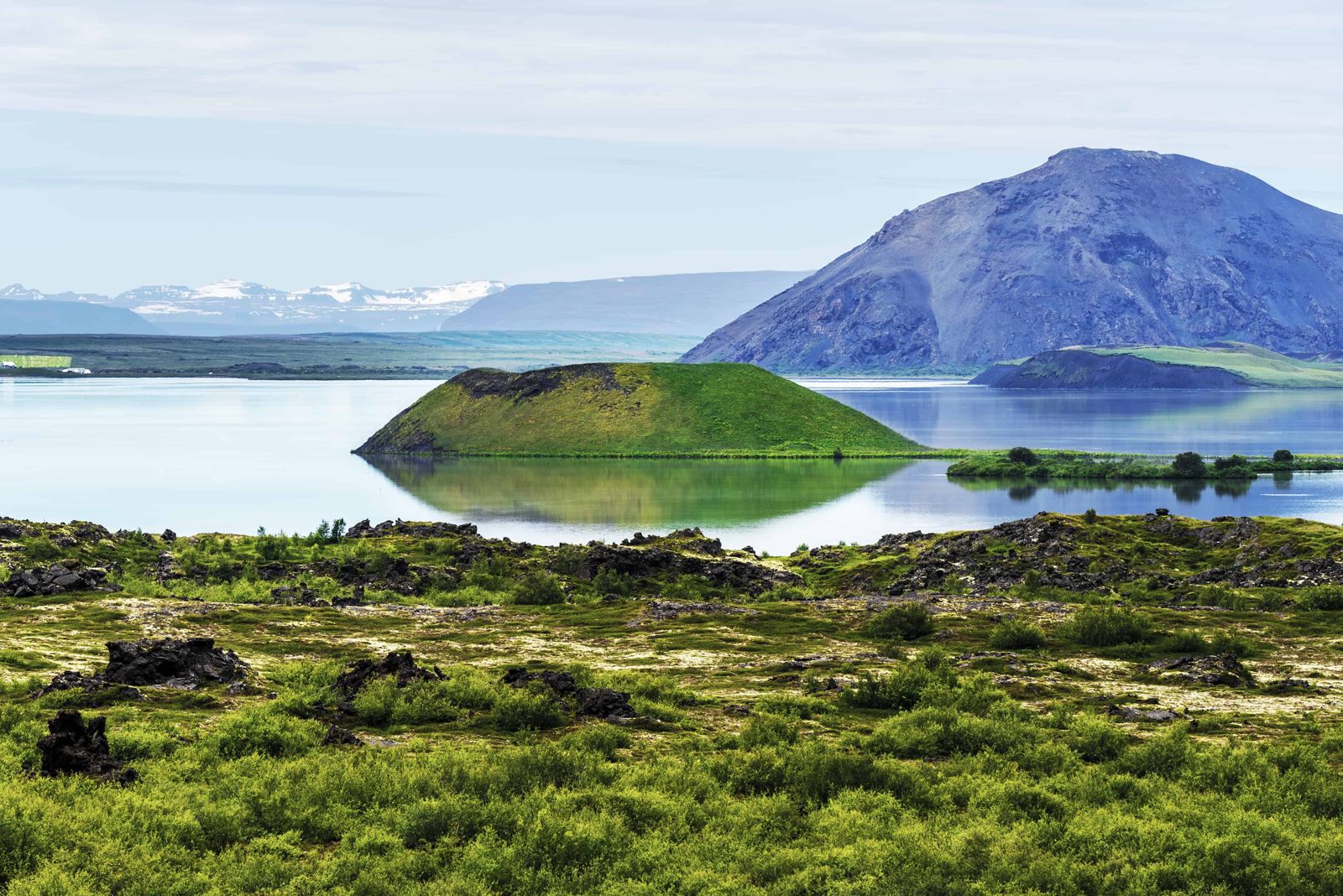
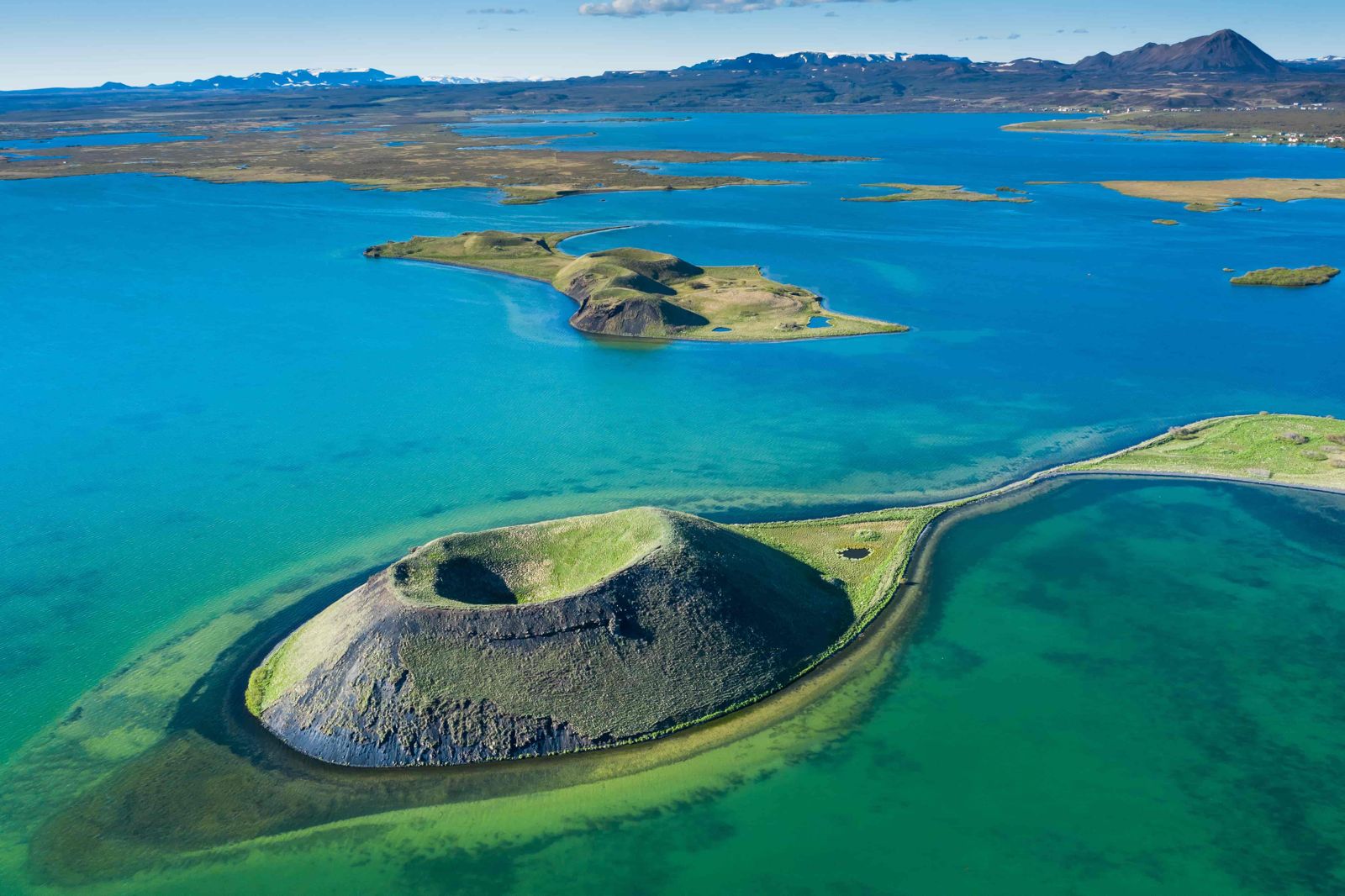
These rounded, grass-covered mounds are not true volcanic craters. They are pseudocraters, also called rootless cones or rootless craters, because no magma channel runs down beneath them. They formed around 2,300 years ago when a lava flow from a nearby eruption spread over wet marshland. The water under the lava boiled, and the trapped steam blew small holes through the cooling rock, leaving behind a cluster of crater-shaped hills.

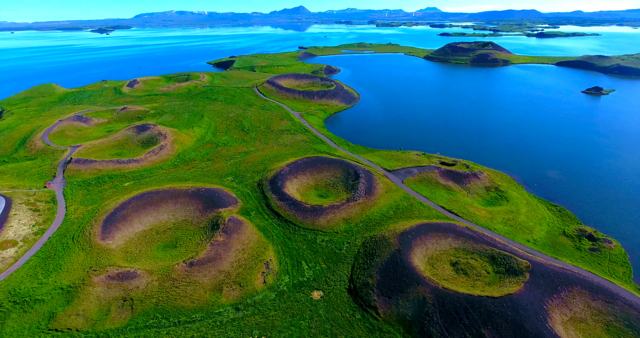
Because they sit right on the Ring Road at the edge of Mývatn, Skútustaðagígar is usually the first stop for anyone driving into the Mývatn area. A gravel path loops between and up onto several of the craters, with views over the lake, its islands and the wetlands that make this one of the best birdwatching spots in Iceland.

The craters are covered in grass and low vegetation, and sheep often graze on the slopes. Marked paths and wooden steps let you walk around the bowls and up onto several rims, so you get both the close view into a crater and the wide view over the lake.

Quick facts

RegionNorth Iceland, on the south shore of Lake Mývatn
From ReykjavíkAbout 480 km, around 6 hours by car
From AkureyriAbout 95 km, around 1 hour 15 minutes by car
EntryFree
Opening hoursOpen all year, accessible at any time
WalkingShort loop 20–30 minutes; full loop about an hour
Time needed30–60 minutes
ProtectedDesignated a natural monument in 1973

How the craters formed

Skútustaðagígar formed when lava from an eruption at Lúdentaborgir and Þrengslaborgir, to the east, flowed out over waterlogged ground near the lake. The heat turned the groundwater to steam, and the pressure blew a series of vents through the lava as it cooled, leaving hollow, crater-shaped mounds rather than the built-up cones of a normal volcano.

Similar pseudocraters exist elsewhere around Mývatn and in a few other spots in Iceland where lava has met wet ground, but this cluster is the largest and easiest to visit, which is why it gave the phenomenon its name in English-language guidebooks.

How to get to Skútustaðagígar

On a guided tourMost Mývatn and Diamond Circle day tours from Akureyri, and multi-day Ring Road tours, stop here since it sits directly on Route 1.
By carThe site has a car park right on the Ring Road at Skútustaðir, on the south side of the lake. It is paved and open all year.
By public transportScheduled buses along the Ring Road between Akureyri and East Iceland pass Skútustaðir, though check current timetables, as services can be limited outside summer.

Walking the craters

A gravel path loops around and between the craters, with a couple of short climbs onto the rims for a view over the lake.

Short loopA short circular route at the western end, closest to the car park, covers the first craters and takes about 20–30 minutes.
Up onto the rimsSteps lead up the side of several craters. From the top you look down into the bowl and out over Mývatn, its islands and the wetlands around the site.
Full loopA longer loop takes in more of the wetlands and the pond between the craters, closer to an hour, with good birdwatching in early summer.

The area is a nesting site for many duck species in spring and early summer, so keep to the marked path and keep dogs on a lead.

Birdwatching at Skútustaðagígar

The craters stand in what is left of the Mývatn wetlands, so the walk doubles as one of the easier birdwatching stops on the lake. Bring binoculars and take your time on the lake side of the loop.

Ducks and swans on the lakeTufted Duck, Eurasian Wigeon and Whooper Swan are the common species and are often here in large numbers. With some patience you may also pick out Barrow’s Goldeneye, Harlequin Duck and Goosander.
Along the shorelineRed-necked Phalaropes sometimes feed close to the shore, spinning on the water. They are not there every day, so count them as a bonus.
On the craters and fieldsMeadow Pipit, Northern Wheatear and White Wagtail are the small birds you are most likely to see along the path. Merlins hunt them here, and now and then a Short-eared Owl flies over the grassland.

Late spring and early summer are the busiest time on the water. This is also the nesting season, so stay on the path and keep your distance from birds on the ground.

Best time to visit Skútustaðagígar

SummerGreen surroundings, nesting birds on the lake and the longest daylight to explore the loop.
WinterSnow-covered craters, a frozen pond and a much quieter site. The view turns almost black and white. The full loop is often not walkable in snow, but the path and steps up the first crater by the car park usually stay easy to reach. Expect ice and wear good boots.

Safety and practical tips

  • Stay on the marked path, the ground around the craters is soft and the vegetation is easily damaged.
  • Bring insect repellent in summer, Mývatn is known for its midges, especially on calm days.
  • Combine the visit with the rest of the Mývatn area, most other sights are within a short drive.
  • Binoculars are worth having if you are interested in birdlife, the wetlands here attract a wide range of species.

Facilities and accessibility

There is a car park at the site. Toilets, a café and fuel are available in Skútustaðir village and at other stops around Mývatn, a short drive away.

On the map

Open in Google Maps →

Nearby places worth a stop

Lake MývatnLake MývatnThe lake the craters sit beside
DimmuborgirTwisted lava formations, a short drive east
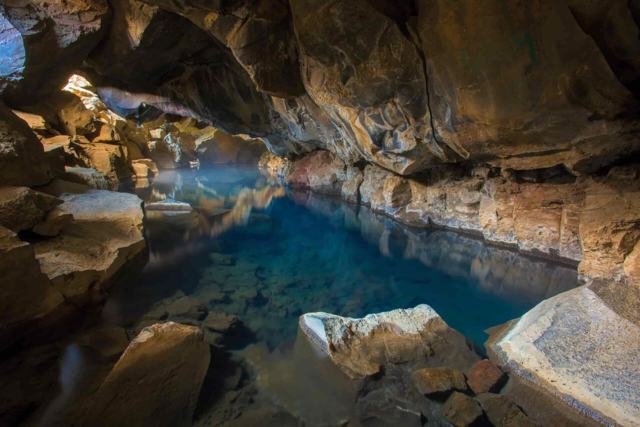
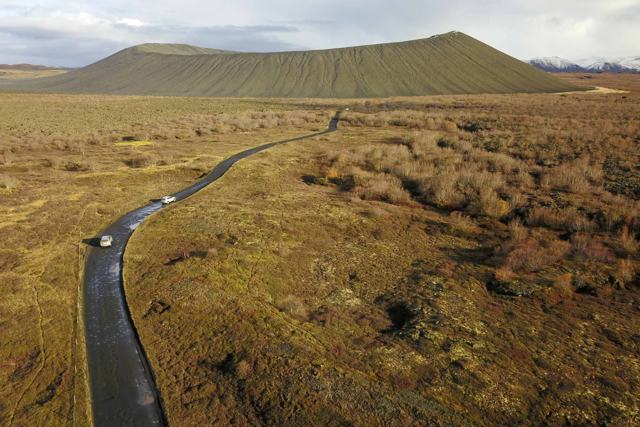
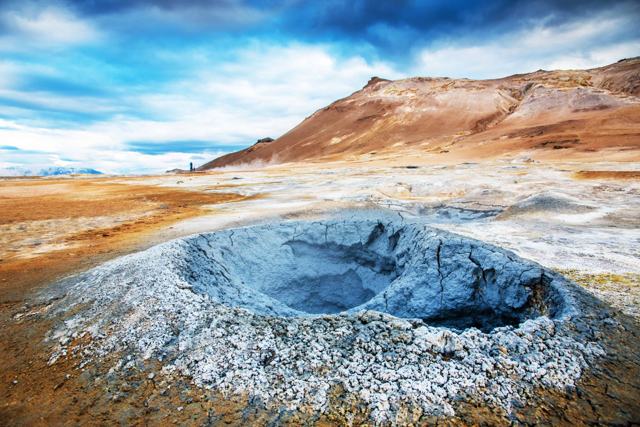
GrjótagjáGrjótagjáSmall lava cave with a geothermal poolHverfjallHverfjallLarge tephra crater you can walk around the rim ofNámaskarð / HveraröndNámaskarð / HveraröndBubbling mud pools and steam vents

Where to stay near Skútustaðagígar

Skútustaðir and the wider Mývatn area have a range of guesthouses and hotels, making it a convenient base for exploring the Diamond Circle and North Iceland.

Skútustaðagígar FAQ

What is a pseudocrater?

A crater-shaped mound formed by a steam explosion when lava flows over wet ground, rather than by magma erupting through it like a true volcanic crater.

Is there an entry fee?

No, the site is free to visit.

How long does the walk take?

The short loop takes about 20–30 minutes, the full loop closer to an hour.

Can I visit in winter?

Yes, the site is open all year. In snow you may only be able to walk to the first crater and up its steps, and the paths can be icy.

Can you walk up the craters?

Yes. Marked paths and steps lead up several of the craters. Stay on them, as the grass and soil on the slopes are easily damaged.

What birds can you see at Skútustaðagígar?

Mostly ducks and other waterbirds: Tufted Duck, Wigeon and Whooper Swan are common, and Barrow’s Goldeneye, Harlequin Duck and Red-necked Phalarope turn up too.

See Skútustaðagígar with a local

Tours and trips that include Skútustaðagígar, booked directly with a local travel agency in Iceland.
Lake Myvatn Day Tour & Goðafoss WaterfallDAY TOURLake Myvatn Day Tour & Goðafoss WaterfallFrom 23,000 ISK per person
More places in North Iceland