Iceland Travel GuideLOCAL TRAVEL AGENCY IN ICELAND
My trip
Talk to a local
Iceland Travel GuideLOCAL TRAVEL AGENCY IN ICELAND
My trip
Talk to a local
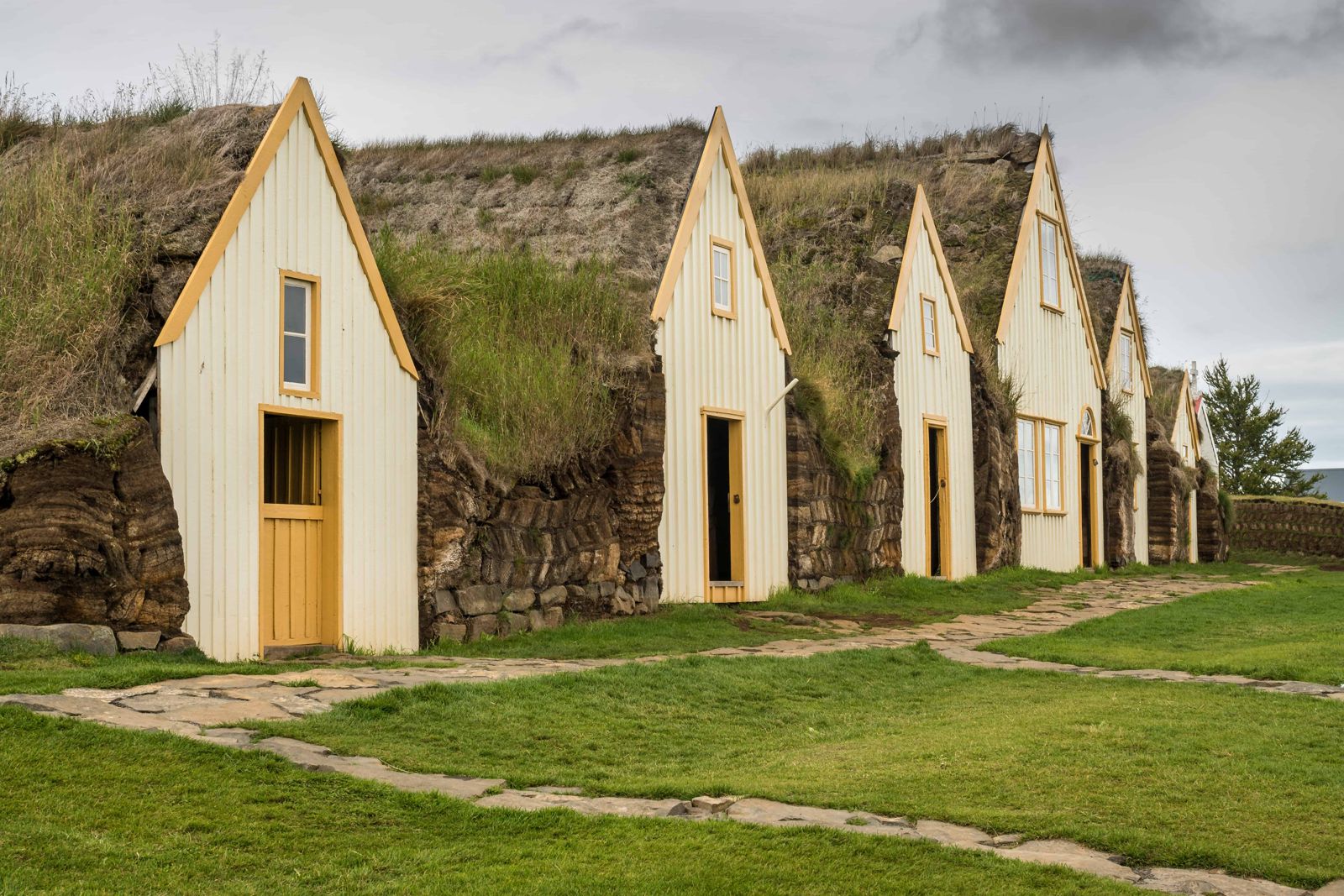
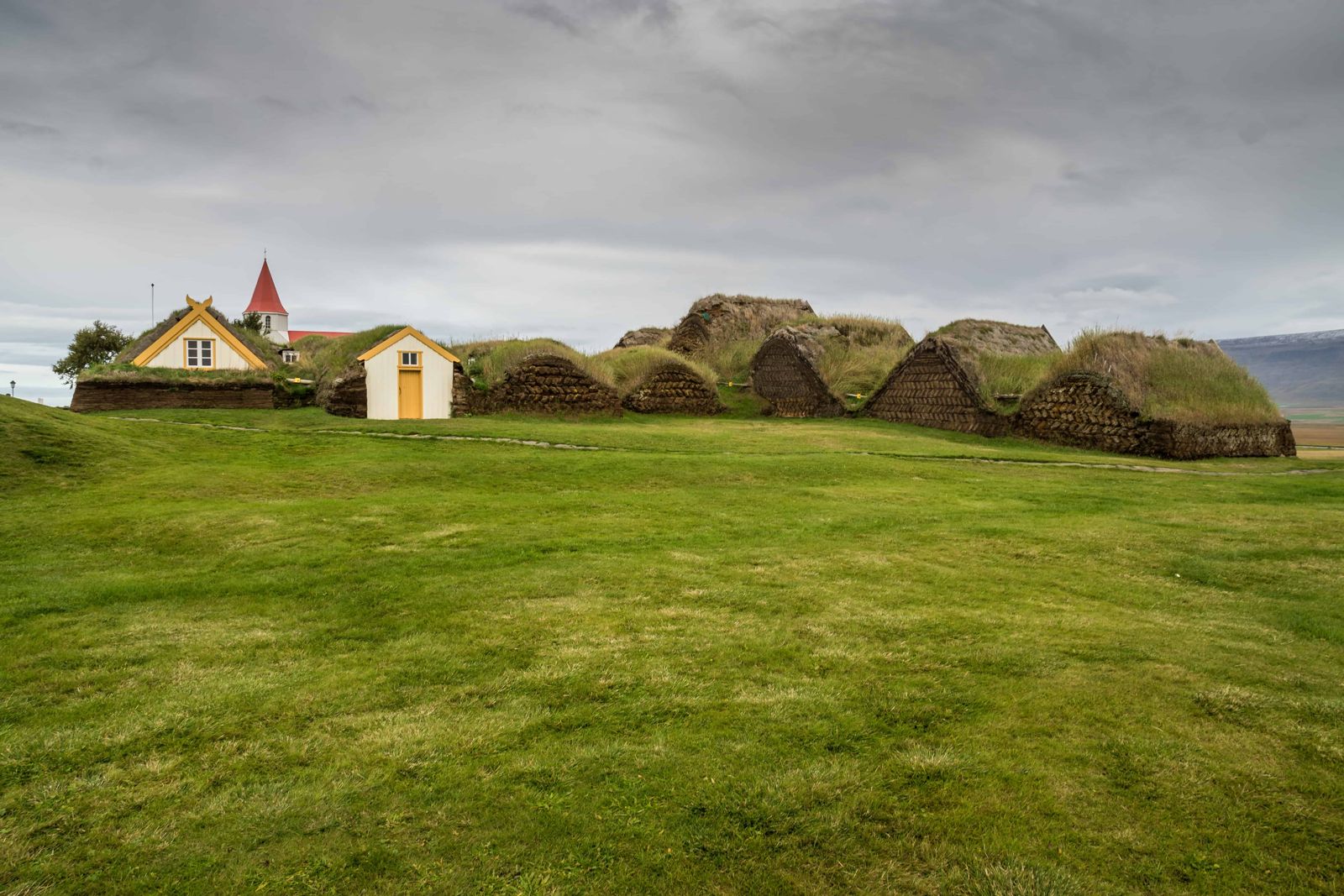
Glaumbær is a preserved turf farm in Skagafjörður, North Iceland, made up of 13 connected buildings and run as a museum. Entry costs ISK 2,200 for adults in 2026, and it is open daily from 20 May to 20 September, with shorter hours the rest of the year. Allow 45 to 60 minutes.
Glaumbær is one of the best places in Iceland to see how ordinary people lived until well into the 20th century. The farm has turf walls laid in a herringbone pattern on stone foundations, with timber fronts facing the yard. Inside, narrow passages connect a kitchen, pantries, store rooms, bedrooms, a guest room and a smithy.
The oldest parts, the kitchen and middle living quarters, are thought to date from the mid-18th century, and the newest buildings were added in 1876 to 1879. People lived here until 1947, when the farm was taken into protection. It is now part of the National Museum of Iceland's collection of historic buildings, and the Skagafjörður Heritage Museum runs it.
There are also two 19th-century timber houses on the site, Gilsstofa and Áshús, which show a different way of building, and archaeologists have found remains of a Viking Age longhouse from the 10th or 11th century in the field nearby.
Until about a century ago, most Icelanders lived in houses like these. Timber was scarce, so walls were built thick from blocks of turf, which kept the cold out, and wood was saved for the frame and the fronts. Few turf farms survive, and Glaumbær is one of the largest and most complete, which is why it has been a museum since 1952.
A farm is said to have stood on the hill at Glaumbær since the Settlement Age. Early in the 11th century it was the home of Snorri Þorfinnsson and his parents, Þorfinnur karlsefni and Guðríður Þorbjarnardóttir. Icelandic sagas say Snorri was born in North America during his parents' expedition to Vinland, which would make him one of the first Europeans born there.
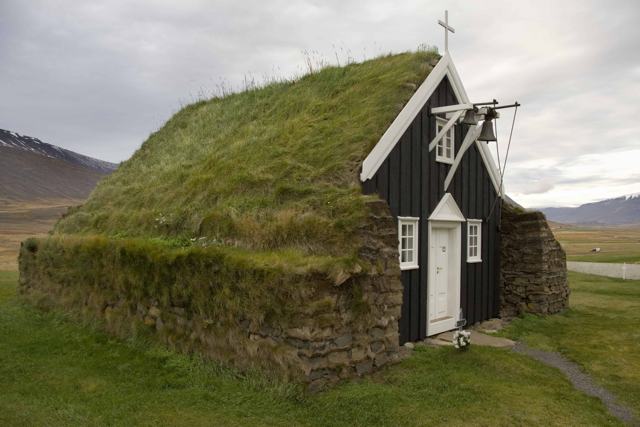
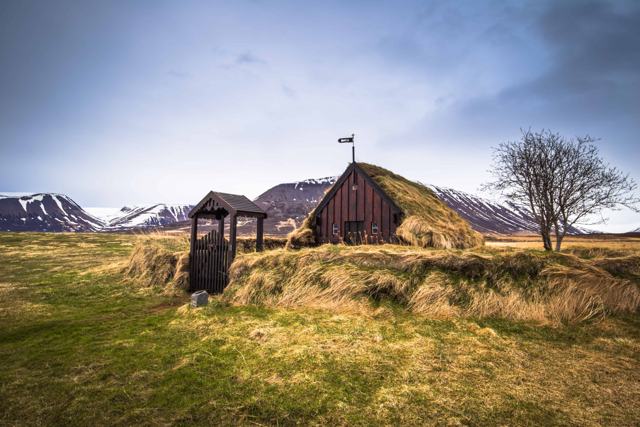
The family later returned to Iceland and settled at Glaumbær, where Snorri is said to have built the first church. The sagas also give him a part in the early spread of Christianity in Iceland. A church still stands beside the farm today, and archaeologists have found the remains of an old longhouse on the site.
You walk through the farm on a set route, with signs in English.
The farm has 13 buildings, joined by a central passage, plus two timber houses that were moved here later.
Glaumbær has been protected since 1947 and belongs to the National Museum of Iceland's historic buildings collection. The Skagafjörður Heritage Museum has run it since 1952.
There is a ticket office and shop, and toilets on site. The museum has a café. The historic buildings have narrow passages and steps, so wheelchair access is limited.
Sauðárkrókur and Varmahlíð have hotels, guesthouses and campsites, and are the closest bases. Akureyri is about an hour and a half away if you prefer a bigger town.
In 2026 adults pay ISK 2,200. Groups of six or more, students, seniors and disabled visitors pay ISK 1,900, and children up to 17 are free.
Daily from 20 May to 20 September, 10:00 to 18:00. Weekdays 10:00 to 16:00 in spring and autumn, and by appointment from 21 October to 31 March.
About 45 to 60 minutes, more if you also have coffee or take a guided tour.
A farm family until 1947. In the early 11th century it was the home of Snorri Þorfinnsson, said to be one of the first Europeans born in North America.
Yes, if you are interested in Icelandic history. It is one of the best-preserved turf farms in the country, and it is simple to fit into a Ring Road trip.
The turf farm has 13 buildings joined by a central passage. There are also two 19th-century timber houses on the site, Gilsstofa and Áshús.
Leave the Ring Road at Varmahlíð and drive about 8 km north on Route 75 towards Sauðárkrókur. The farm and its church are beside the road.
The oldest parts are from the mid-18th century and the newest from 1876–1879. People lived in the farm until 1947, and it opened as a museum in 1952.