Iceland Travel GuideLOCAL TRAVEL AGENCY IN ICELAND
My trip
Talk to a local
Iceland Travel GuideLOCAL TRAVEL AGENCY IN ICELAND
My trip
Talk to a local
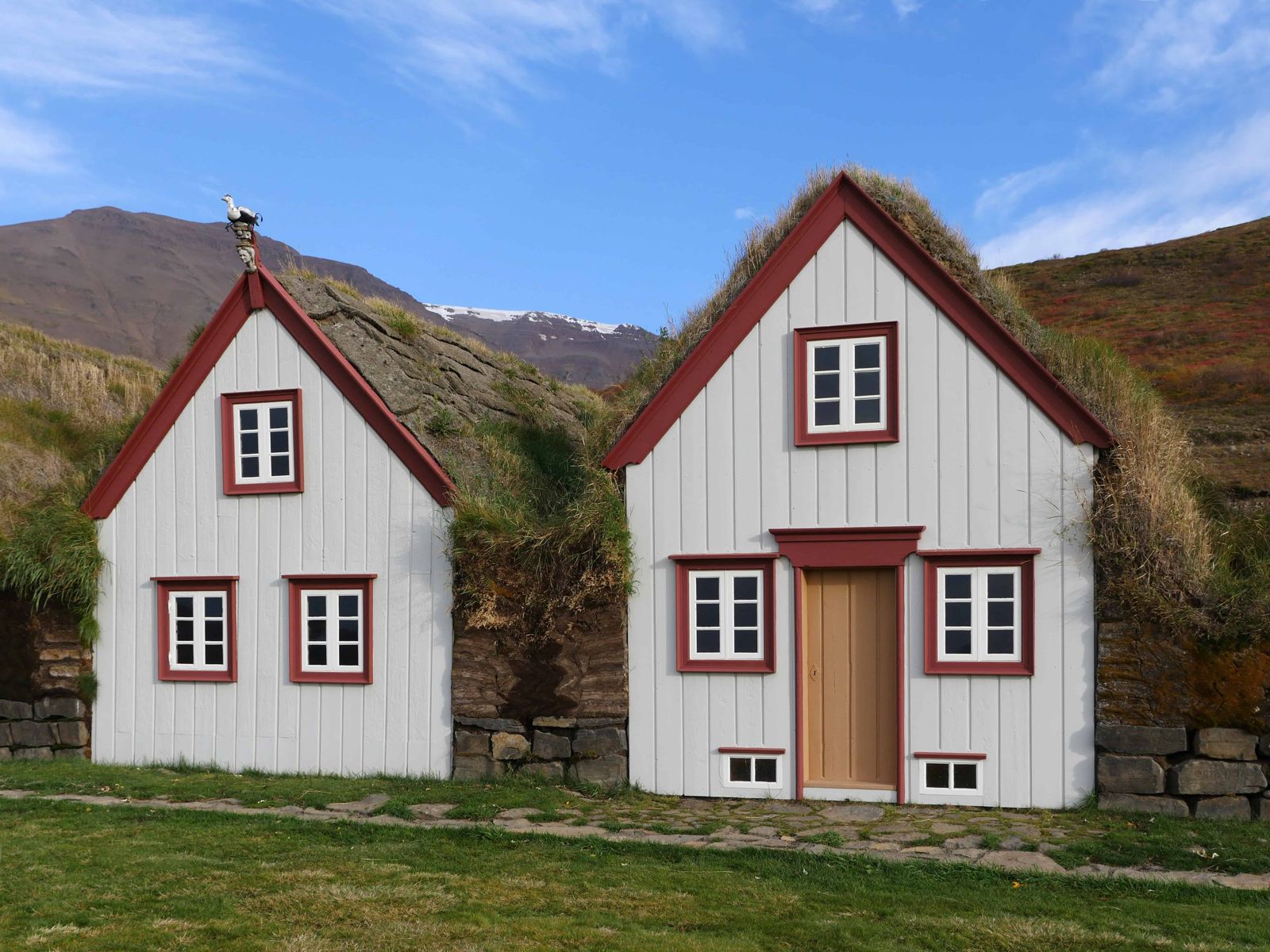
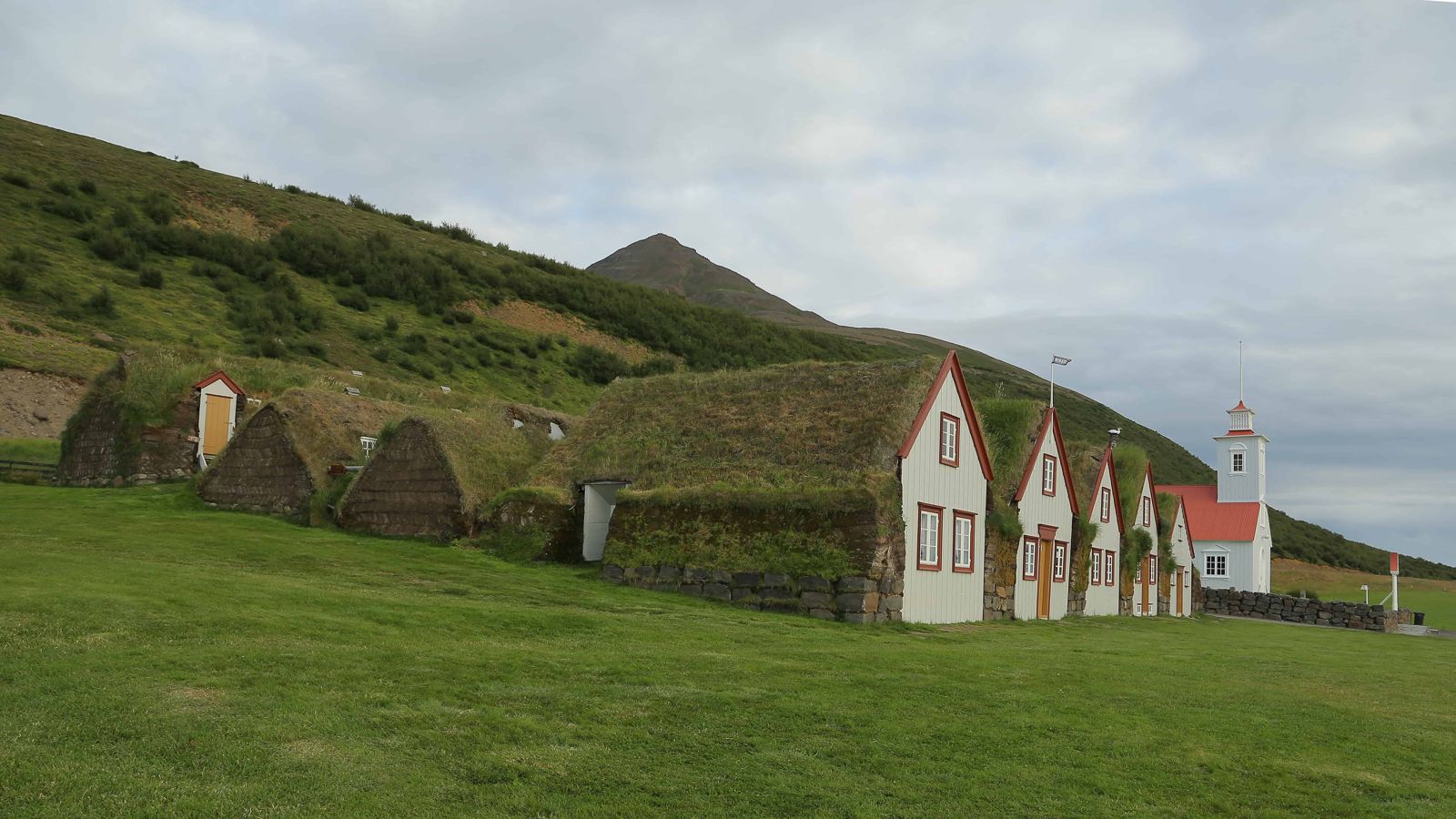
The Laufás turf houses are a large 19th-century turf farmstead and church on the east shore of Eyjafjörður in North Iceland, about 30 km from Akureyri. The site is run by Akureyri Museum for the National Museum of Iceland. It has an entry fee and is normally open in summer, but is currently closed for renovation, so check before you go.
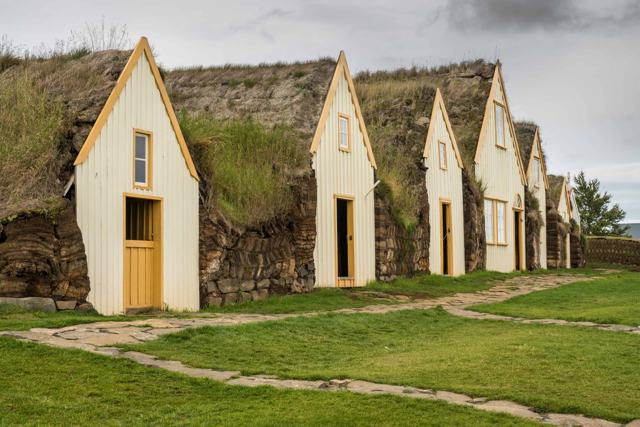
Laufás was a rich church farm and the home of the local priest for centuries. By Icelandic standards it was a wealthy place, more a manor than an ordinary farm, and its turf buildings are unusually large, with a broad row of white gables facing the yard and the mountains behind. Inside, long corridors connect the rooms. The farm was rebuilt in 1866–1870, when the Rev. Björn Halldórsson lived here, and the oldest part still standing dates from 1840.
Inside you see how a well-off Icelandic household lived: a kitchen and living room, a guest room, a bridal room where brides prepared for their weddings, and furniture and clothing from the early 20th century. The church next door was built in 1865 and has a carved pulpit from 1698.
Turf farms like this were the normal way to build in Iceland for centuries, because wood was scarce and turf insulated well. Laufás is one of the best places in the north to see how the technique worked.
Laufás appears in records soon after Iceland was settled, and church records go back to around 1047. It was both a chieftain's seat and a parish farm, and its priests were among the wealthiest in the region. Eider ducks nested on the shore, and the down brought in good extra income.
The last priest to live in the turf house moved out in 1936, into a newer vicarage next door. Until then the old farm had been a working home, which is one reason it survived in such good shape.
The National Museum has looked after the site since 1948. The furnishings come from neighbouring farms, so the rooms show what an ordinary well-off household would have used.
The Akureyri Museum states that Laufás is closed for renovation and will reopen in June 2027. The grounds and church may still be worth a look from outside, but check before you drive.
When the museum is open you walk through the farm at your own pace. Allow time for both the farmhouse and the church.
All of this applies when the site is open. During the renovation the buildings may be closed or partly covered.
When open there is a visitor centre with a small café and a handicraft shop, and tickets are sold in the white house by the car park. In summer, Icelandic horses and crafts demonstrations run on some days. The turf rooms have low doorways and uneven floors, so access is limited.
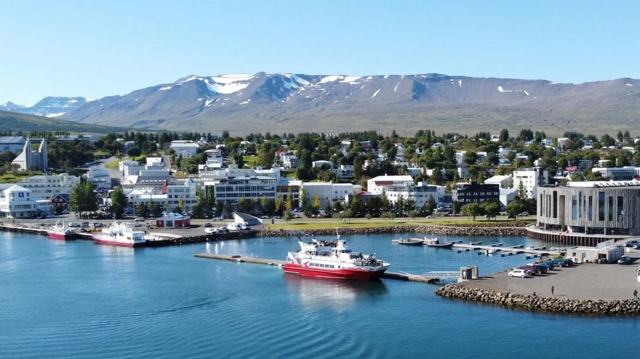
Akureyri has the widest range of hotels and guesthouses. There are also a few farm stays and cottages around Eyjafjörður and Grenivík.
According to Akureyri Museum, it is closed for renovation and will reopen in June 2027. Confirm before you travel.
About 30 km, roughly 30 minutes by car.
A 19th-century turf farm with connected rooms, a bridal room, period furniture, and a church from 1865 with a 1698 pulpit.
Yes, when the museum is open. Check the museum for current prices.
About an hour is enough.
The farm was rebuilt in 1866–1870 and its oldest surviving part is from 1840. A priest lived in the turf house until 1936.